Home Nursing Care for Diabetic Patients: Managing Diabetes Safely at Home
Diabetes does not take a day off.
It does not care that the family has to go to work in the morning that the hospital is a way away or that the person with diabetes is really tired, from going to the clinic again.
Every day diabetes needs attention. You have to check the blood sugar levels give the medications on time and make sure the person eats the food. You even have to check their feet
For a lot of families in Kerala, Tamil Nadu, Karnataka, Andhra Pradesh and Telangana taking care of a family member with diabetes at home is a job. It is like having another job that nobody taught you how to do.
This is where home nursing care for people, with diabetes really helps. It is not something but something that really makes a difference. It helps the person with diabetes stay healthy reduces the number of times they have to go to the hospital and gives the family some time to rest.
Why Diabetes Management at Home Is More Complicated Than It Looks
Most people know that diabetes is about checking blood sugar and taking medicine. What they do not realize is how many things need to go every single day for the management of diabetes to actually work.
If you miss a dose of insulin at the time your blood sugar can go up really high. A small cut on your foot can become a problem if you do not notice it for a few days. A meal that seems fine can make your glucose levels go up high.. For older people, with diabetes who live with their families these small mistakes happen more often than people think.
The problem is not that families do not care about people with diabetes. It is that managing diabetes requires a lot of precision that most families cannot provide all the time.
A nurse who comes to your home can help with this.
What a Home Nurse Does for a Diabetic Patient
The role of a home nurse in diabetes care is very important. They do more than just give injections. A home nurses job is to take care of a patient in many ways.
Blood Sugar Monitoring
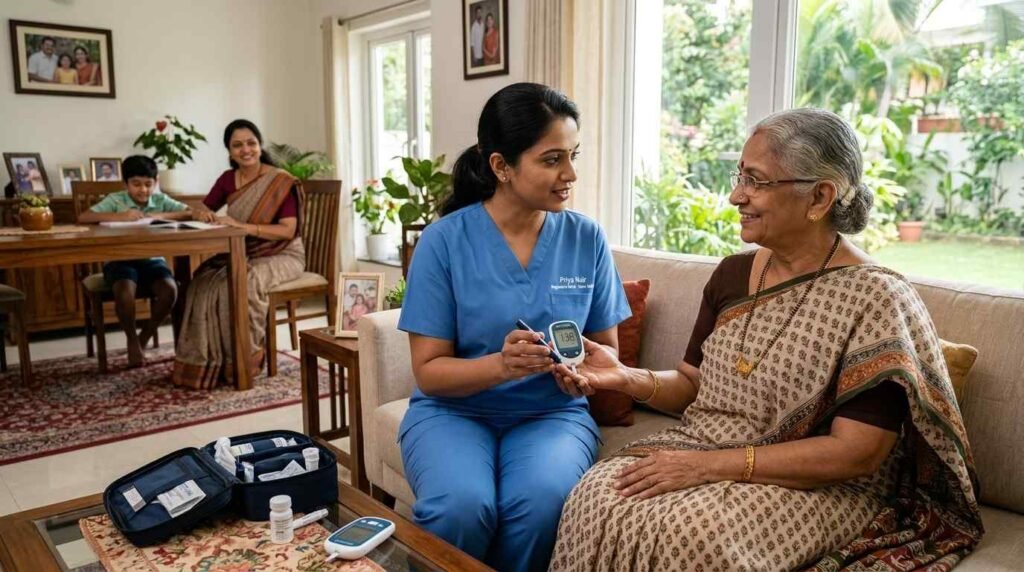
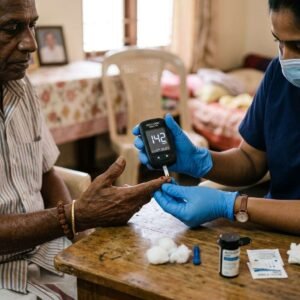
Checking blood sugar levels is very important for diabetes management. A home nurse checks blood glucose levels at the times. In the morning after meals and before bed. They write down the readings and track patterns over time.
If blood sugar levels are too high or too low the nurse tells the doctor away. This helps prevent hospital visits.
Insulin Administration
For patients who take insulin a home nurse gives the right dose at the right time. They make sure to rotate injection sites to prevent lumpy tissue buildup.
Many families try to manage insulin on their own.. For elderly patients or those with vision problems having a nurse help with insulin reduces errors.
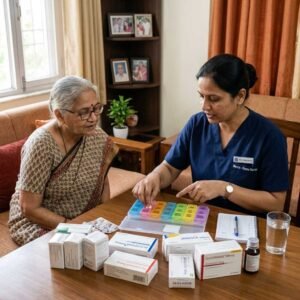
Oral Medication Management
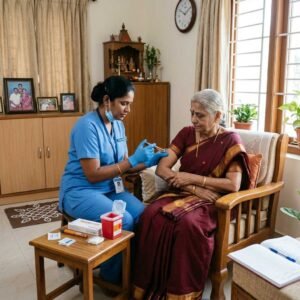
Diabetic patients often take medicines. For blood pressure, cholesterol and more. A home nurse makes sure patients take the medicine at the right time.
They also watch for any side effects. For patients taking many medicines this helps a lot.
Diabetic Foot Care
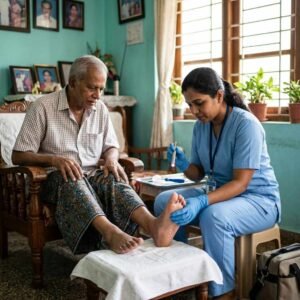
Diabetic foot problems are common. Can be prevented. Diabetes reduces blood flow to the feet. Causes nerve damage. A home nurse checks the feet daily for redness, swelling or cracks.
They. Dress wounds correctly. If something looks wrong they tell the doctor away. Many amputations can be prevented with foot checks.
Diet and Nutrition Monitoring
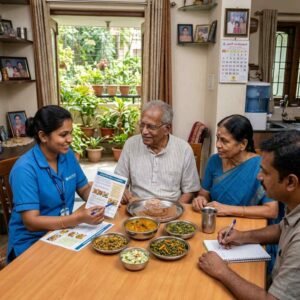
A home nurse helps with diet and nutrition. They make sure patients eat the foods and do not skip meals.
They work with the family to make sure patients eat foods. In some households this requires understanding foods and customs.
Monitoring for Complications
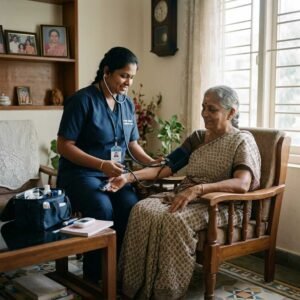
Diabetes affects parts of the body. Kidneys, eyes, heart and nerves. A home nurse watches for signs of these problems during visits.
They look for swelling changes, in urination, shortness of breath or skin changes. If they notice anything they tell the doctor. This helps prevent problems.
When Is Home Nursing the Right Choice for a Diabetic Patient?
Home nursing is not for every patient. There are times when it makes sense to have a home nurse.
For example when a diabetic patient comes home from the hospital after a complication like a hypoglycaemic episode or a diabetic foot infection it is really helpful to have a nurse at home. The nurse can help the diabetic patient recover at home.
If the diabetic patient is old and lives alone or does not have a lot of family to help it is hard to keep track of their blood sugar every day without a nurse. A home nurse can help with this.
If the diabetic patient is taking medication but their blood sugar is still not, under control a home nurse can help them get their blood sugar stable. The home nurse can help the diabetic patient do the things every day to keep their blood sugar from getting too high or too low.
If the diabetic patient has a wound or foot ulcer that needs to be taken care of every day a home nurse is an idea. The nurse can make sure the wound is taken care of every time.
If the person taking care of the patient at home is getting very tired and stressed a home nurse can help. Taking care of a patient is a lot of work especially if you have other things to do like work or take care of a family. A home nurse can give the family caregiver a break.
The Difference Between a Home Nurse and a General Caretaker for Diabetic Patients
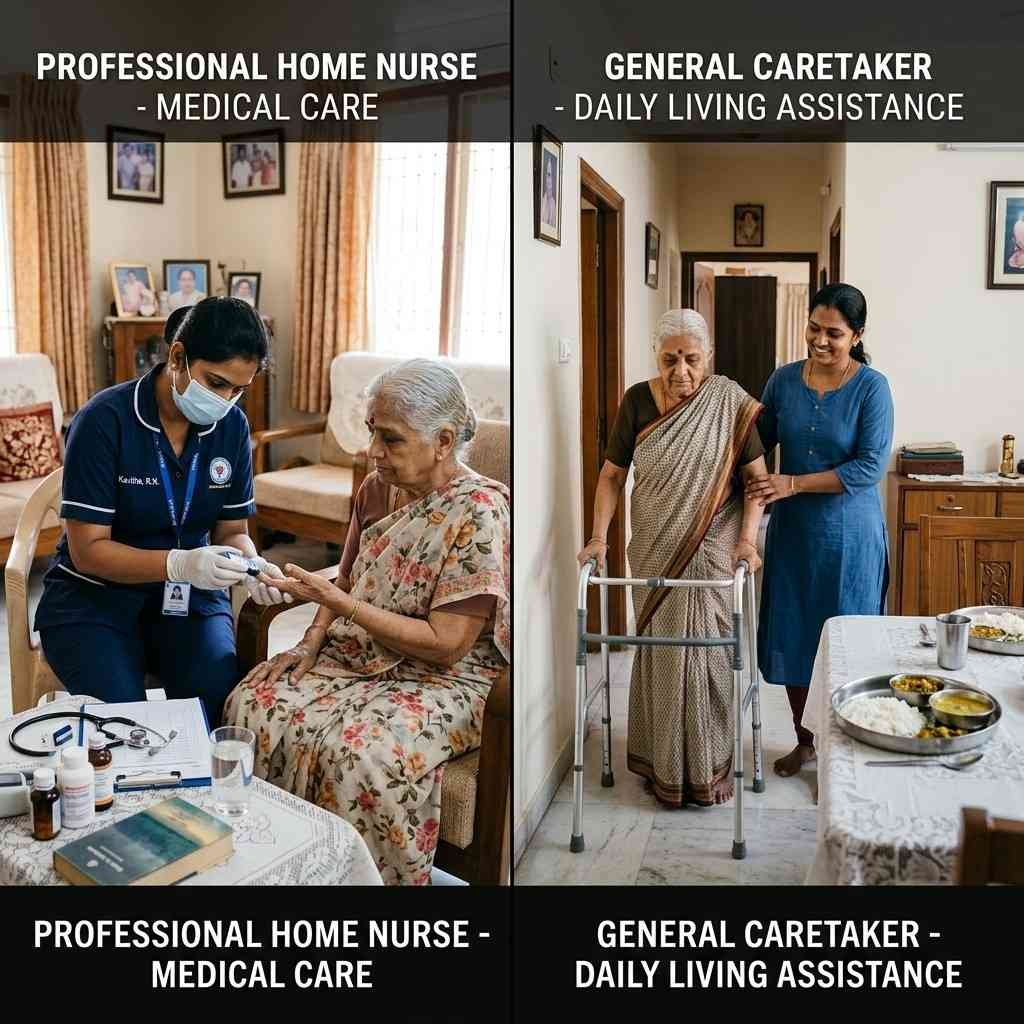
Many families ask this question. It is worth answering clearly.
A home nurse has training to take care of patients. They can give insulin shots check sugar levels with a machine, dress wounds, spot signs of low or high blood sugar and talk to the doctor about the patients condition.
A general caretaker helps with tasks. Like helping the patient take a bath eat move around and stay comfortable. They are not trained to do tasks.
For a patient who needs regular medical help. Like insulin shots, wound care and monitoring. A qualified home nurse is the best choice. A caretaker alone is not enough.
Sometimes both work together. The home nurse does the tasks during their visit and a caretaker helps with daily personal care for the rest of the day. This is common, in households where the patient needs both medical help and personal support. Diabetic patients benefit from having a home nurse.
In South Indian households diabetic patients need both medical supervision and personal assistance. A home nurse provides the supervision. A caretaker provides the assistance.
Read more: Home Nurse vs Caretaker: What Is the Difference and Which One Does Your Family Actually Need?
Hypoglycaemia and Hyperglycaemia: What the Family Needs to Understand
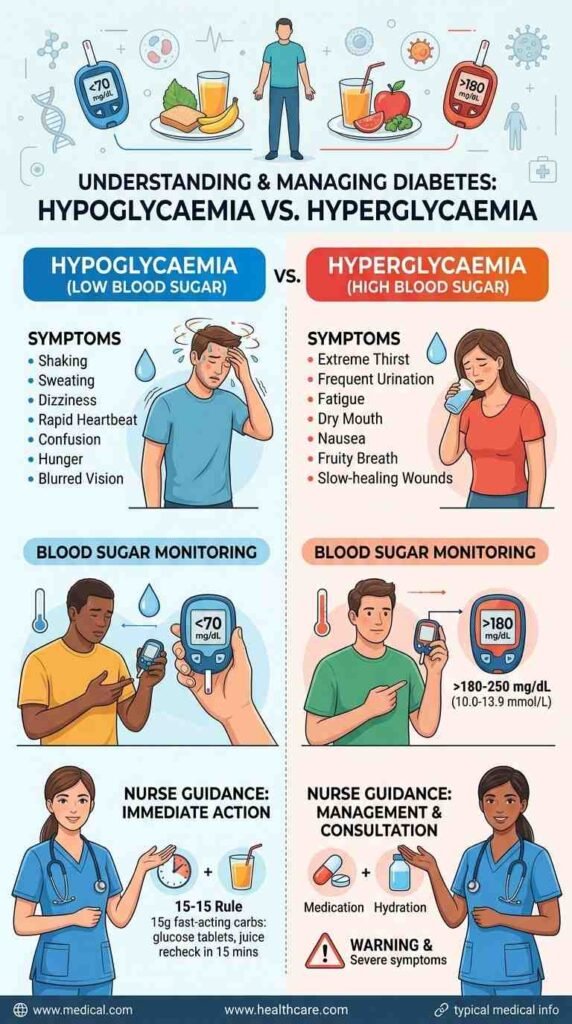
When we have a home nurse to help us families need to know about two very important situations.
Hypoglycaemia is when the blood sugar of the patient drops low it is usually below 70 mg/dL. The patient may feel very shaky they may sweat a lot they can get confused or they may feel anxious for no reason. In bad cases the patient can even lose consciousness. This is a problem that needs to be fixed right away so we usually give the patient something sweet, like glucose, juice or sugar and we call the doctor.
Hyperglycaemia is when the blood sugar of the patient stays too high for long. The patient may feel very thirsty they may need to go to the bathroom a lot they can feel very tired and in serious cases they can get a condition called diabetic ketoacidosis which means they need to go to the hospital.
A home nurse is trained to deal with Hypoglycaemia and Hyperglycaemia. But it is also important that the family knows about these signs so even when the nurse is not around the patient is still safe because the family knows what to look for.
What to Tell the Home Nurse Before Care Begins
When we get a home nurse for a patient it is really important that we give the nurse all the information they need from the very start. This makes a difference in the care that the patient gets.
We should tell the home nurse these things from day one:
- The patients current blood sugar readings and the target range that the doctor wants
- All the medicines that the diabetic patient is taking. This includes the type of insulin, how much to take, when to take it and all the other medicines that the diabetic patient takes by mouth
- If the diabetic patient is allergic to any medicines. Has had a bad reaction to any medicines
- What the diabetic patient likes to eat. What they cannot eat
- If the diabetic patient has any problems with their feet. Has any wounds
- How to get in touch with the doctor who is treating the patient in case something goes wrong
- If the diabetic patient has been in the hospital recently and why they were in the hospital
If we tell the home nurse all this information, at the start they will not have to spend a lot of time trying to figure everything out. Instead the home nurse can spend time taking care of the diabetic patient.
Home Nursing for Diabetic Patients in South India — A Few Local Realities
Diabetes is a problem in Kerala, Tamil Nadu, Karnataka, Andhra Pradesh and Telangana. South Indians have a genetic predisposition to Type 2 diabetes, combined with dietary patterns high in refined carbohydrates and a rapid shift toward sedentary urban lifestyles.
This means that home nursing for patients is something that many people need. It is not something that a few people need. It is a common need in many homes.
There are a things that are important for home nursing in South India.
- Language is important. If a diabetic patient in Kozhikode is talking about how they feel after taking their insulin the nurse needs to understand what they are saying. If the nurse speaks Malayalam or the local language they can understand the patient better.
- Food is also important. People in South India eat a lot of rice and sweets during festivals. They also eat a lot of food when they are with their families. A home nurse who knows about the food culture can talk to the patient and their family about food in a way that makes sense to them.
- Family is very important in South India. When it comes to health the whole family is involved in making decisions. A home nurse who can talk to all the family members. Like the son who calls from Bengaluru or the daughter-in-law who takes care of the house. Can become a part of the familys health care team. The nurse is not just someone who takes care of the patient. Someone who is part of the family.
Home nursing for patients in South India is about more than just taking care of the patient. It is about understanding the patient and their family and working with them to keep the patient healthy. Home nursing for patients is something that many people, in South India need and it is something that requires a deep understanding of the local culture and way of life.
Conclusion
Diabetes is a condition that needs you to be consistent every day.
It does not need dramatic actions or expensive machines. It just needs you to pay attention to it every day. Check your blood sugar take your medicine on time eat your meals carefully take care of your feet and watch out for any signs that something’s not right.
For families in South India who are taking care of a patient at home being consistent is often the hardest part. This is because they have jobs, children they live away and they get very tired. It is not that they do not care it is just that taking care of a diabetic patient is very hard without help from doctors and nurses.