Home Nursing Care for Stroke Patients: What Every Family Needs to Know After Discharge
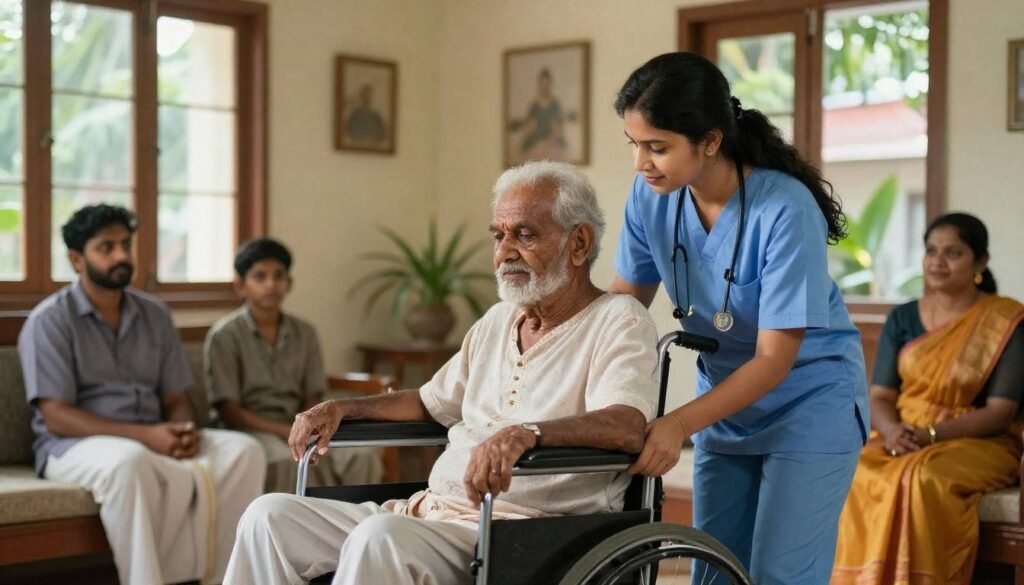
The day a stroke patient comes home from the hospital is an emotional day for the family. It can also be very scary.
The hospital part is over. The doctors have done their job.. When you are standing at the front door with a parent or spouse who cannot move their left arm like they used to or who has trouble finding words when they talk the family starts to understand that there is a lot they did not know.
The hardest part is not when the stroke patient is in the hospital. It is everything that happens after they come home.
Stroke patients take a time to get better. It does not always happen at the speed. Some days the stroke patient will get a lot better. Days it will feel like they are not getting better at all.. It is not like when you have a cut that heals in a few weeks. Stroke recovery happens in the brain. It takes time. You do not know how much the stroke patient will be able to do
What the family does after the stroke patient comes home is very important. The care they get at home the exercises they do to get better and finding out if there are any problems all of this is very important for the stroke patient.
What Is a Stroke? A Simple Explanation
Think of your brain as a city that runs on blood. Every second blood brings oxygen and nutrients to brain cells that help you do things like move your arm, form a sentence, see a face and swallow food.
A stroke happens when the blood supply to part of the brain is cut off.
When brain cells do not get blood they start to die.. This happens really fast. The brain cells start to die within minutes. This is why one stroke patient may lose the use of their side and another stroke patient may lose the ability to speak.
There are two types of stroke.
- Ischaemic stroke is when a blood clot blocks an artery that brings blood to the brain. This is the common type of stroke and it accounts for most stroke cases.
- Haemorrhagic stroke is when a blood vessel in the brain bursts and bleeds into the surrounding tissue. This type of stroke is not as common. It is often more serious.
There is a condition related to stroke that you should know about. It is called a TIA or Transient Ischaemic Attack sometimes called a mini-stroke. A TIA is when the blood supply to the brain is cut off for a time and then it starts again. The symptoms of a TIA may only last a minutes and then they go away completely. But a TIA is a warning sign that a full stroke may happen. So it should never be ignored.
Stroke is a serious medical emergency. The faster you get treatment, for a stroke the more brain tissue can be saved. This is why it is so important to know the signs of a stroke and get help away. The faster treatment begins for a stroke the more brain tissue can be saved, which is why knowing the signs of a stroke makes such a difference. Stroke is an emergency and the faster treatment begins for a stroke the more brain tissue can be saved.
What Happens to the Brain After a Stroke — And Why Recovery Takes Time
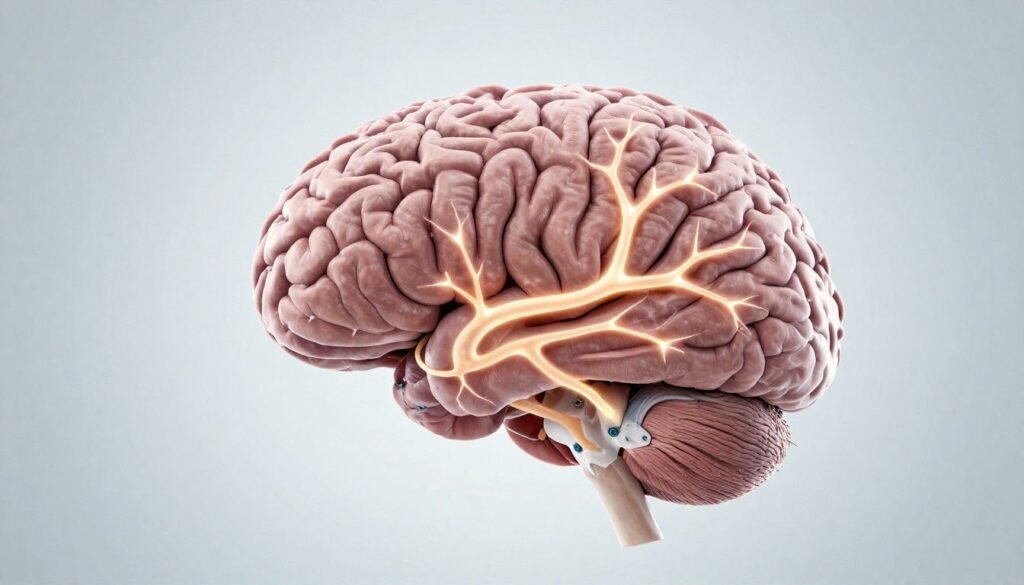
Before understanding what a home nurse does it helps to understand what the body is actually recovering from. A stroke happens when the blood supply to part of the brain is suddenly cut off. This can be because of a clot blocking an artery or a blood vessel bursting. When brain cells do not get oxygen they start to die within minutes.
The damage from a stroke depends on which part of the brain’s affected and for how long. That is why every stroke patient is different. One person may have weakness on their left side. Another person may have trouble swallowing. A third person may have lost the ability to speak clearly even though their thinking is fine.
The brain can adapt. When one area is damaged other areas can sometimes take over.. This does not happen on its own. It needs repetition, stimulation and consistent rehabilitation.
The home environment is very important. Therapy done in a clinic twice a week is usually not enough. Recovery happens through movement, consistent care and a safe home routine. This is what makes a difference.
The brains ability to adapt is called neuroplasticity. When a person has a stroke their brain tries to rewire itself. This rewiring is driven by activities and consistent rehabilitation. A home nurse can help with this.
Daily care and movement, at home can help a person recover from a stroke. A safe home routine can also help. This is why a home nurse is important. They can provide care and help with rehabilitation.
A stroke affects the brain and the body. It can cause different problems.. With the right care and rehabilitation a person can recover. A home nurse can help with this recovery.
Common Effects of Stroke That Home Nursing Addresses
Every stroke is different.. There are some common challenges that families and home nurses work with.
Physical Weakness or Paralysis
Weakness or complete loss of movement on one side of the body is a problem. This is called hemiplegia or hemiparesis. The patient may not be able to walk on their own. They may need help moving from bed to chair. They may have grip strength on one side.
Difficulty Swallowing (Dysphagia)
Swallowing requires a surprisingly complex coordination of muscles — and stroke can disrupt it. Patients with dysphagia are at risk of food or liquid entering the airway, which can lead to aspiration pneumonia — one of the most serious complications in stroke recovery

Speech and Communication Difficulties
Some stroke patients have trouble speaking. They may have trouble understanding language, reading or writing. This is called aphasia. It doesn’t mean they are not smart. Many patients with aphasia think clearly. Can’t get words out. This is very frustrating for them. They need patience from everyone around them.
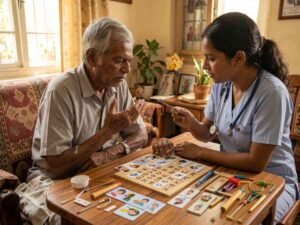
Memory and Cognitive Changes
Some stroke patients get confused. They may have trouble concentrating. They may forget things. They may have trouble solving problems and making plans. These changes can be small. They are sometimes missed in the weeks when physical recovery is the main focus.
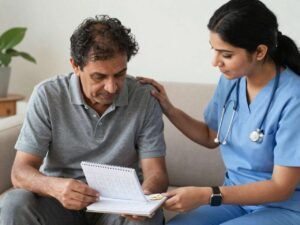
Emotional and Psychological Effects
Depression after a stroke is very common.. It is often not treated. The brain chemistry changes, loss of independence and emotional weight of what happened can lead to withdrawal. Patients may get irritable. They may cry suddenly. They may seem flat. Families often think the patient is being difficult or uncooperative.. In most cases it’s a medical and psychological response to the stroke itself. Stroke patients need help.

Bladder and Bowel Changes
A stroke can affect bladder control. This can lead to incontinence or urinary retention. Bowel function may also be disrupted. These issues are manageable, with nursing care.. They are often hard for families to discuss or handle on their own.
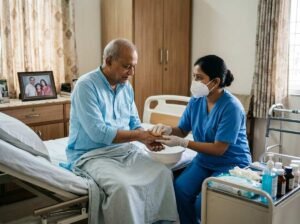
What a Home Nurse Does for a Stroke Patient
A home nurse is really important for a stroke patient. They have the skills to help the patient recover at home. The home nurse does things that family membersre not able to do on their own.
Vital Signs Monitoring
Blood pressure is a deal after a stroke. If it is too high the patient might have another stroke. If it is too low it can slow down the recovery. A home nurse checks the patients blood pressure, heart rate, oxygen saturation and temperature all the time. They write it all down. Let the doctor know if something is not right.
Positioning and Pressure Sore Prevention
Some stroke patients cannot move much. They might stay in the position for a long time. This can cause pressure sores. A home nurse moves the patient around every two hours if they are in bed. They also check the patients skin every day to make sure they are not getting any sores. The home nurse helps the patient sit and lie down in a way that’s good for them.
Medication Administration and Management
Stroke patients usually have to take a lot of medicine. This medicine is really important. A home nurse gives the patient their medicine at the time and in the right amount. They watch for any side effects and keep track of the medicine. The doctor can look at this record when they visit the patient.
Physiotherapy Assistance
A physiotherapist helps the patient make a plan to get better. A home nurse helps the patient do the exercises they need to do every day. They also help the patient move and do not let them stay in one place for too long. This is a part of recovering from a stroke at home.
Swallowing and Feeding Support
Some patients have trouble swallowing. A home nurse helps them eat and drink safely. They make sure the patients food and drinks are the texture. They also help the patient eat in a way that’s safe for them.
Catheter and Bladder Care
Some patients have a catheter. A home nurse helps take care of it. They keep it clean. Check for any infections. They also help the patient learn to use the bathroom when the doctor says it is okay.
Speech and Cognitive Support
A home nurse can help the patient with talking exercises. They talk to the patient in an patient way. They let the family and doctor know if the patient is having trouble thinking or talking.
Emotional Support and Observation
A home nurse visits the patient every day. They get to know the patient. Can tell if something is wrong. If the patient is feeling sad or upset the home nurse can help. They can also tell the family and doctor if the patient needs help. A home nurse is really important for a stroke patient. They help the patient recover, and Get back to normal.
The Risk of a Second Stroke — And How Home Nursing Helps Reduce It
Families need to know this: the risk of a stroke is really high in the weeks and months after the first stroke. The risk of a stroke is highest then because the things that caused the first stroke. Like high blood pressure, uncontrolled blood sugar, atrial fibrillation and not taking medication correctly. Second strokes happen because of this.
A home nurse can help with this. They check blood pressure every day make sure patients take their medication check blood sugar levels in patients with diabetes. They act fast when the readings are not safe. These tasks are important for preventing a stroke. They are not about making the patient feel comfortable. They are about preventing a stroke.
Warning Signs of a Second Stroke to Watch For
A home nurse is trained to recognise these and act immediately:
- Sudden. Numbness on one or both sides of the body
- New or worsening difficulty speaking or understanding speech
- A sudden severe headache with no reason
- Sudden vision changes, in one or both eyes
- Loss of balance, coordination or difficulty walking
If any of these signs appear the home nurse does not wait to see what happens. They call emergency services away.
Setting Up the Home for a Stroke Patient
Before the stroke patient comes home we need to get the house ready. A home nurse can give us some tips when they come to visit for the time but here are some things that most homes in South India need to do to help the stroke patient:
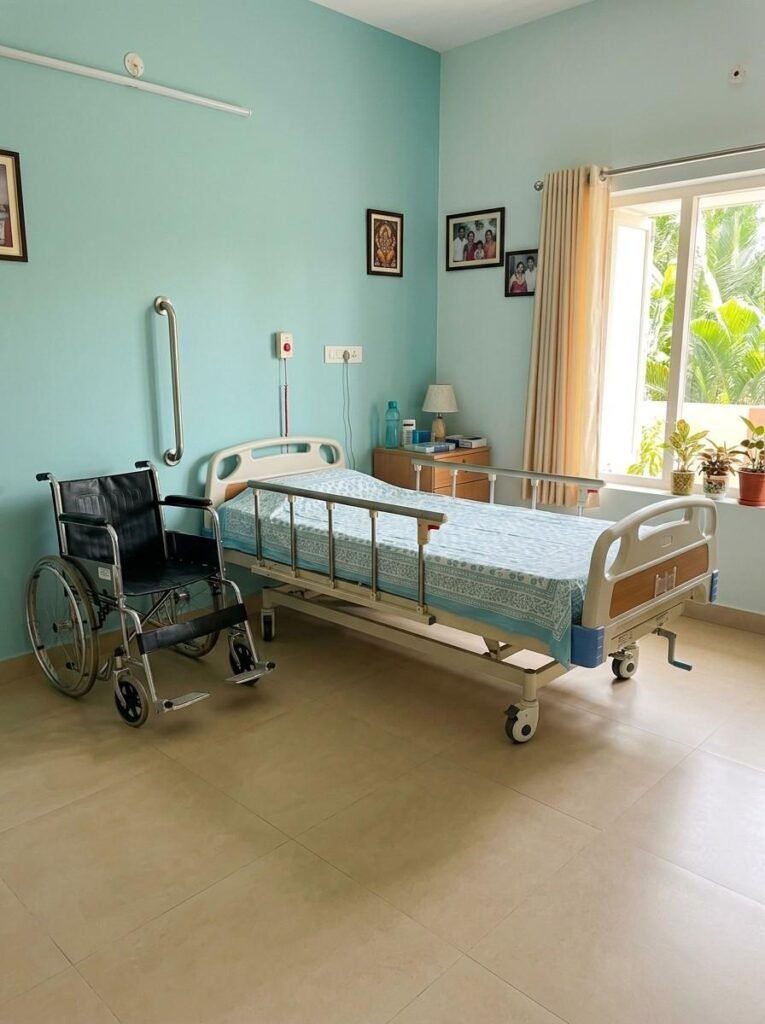
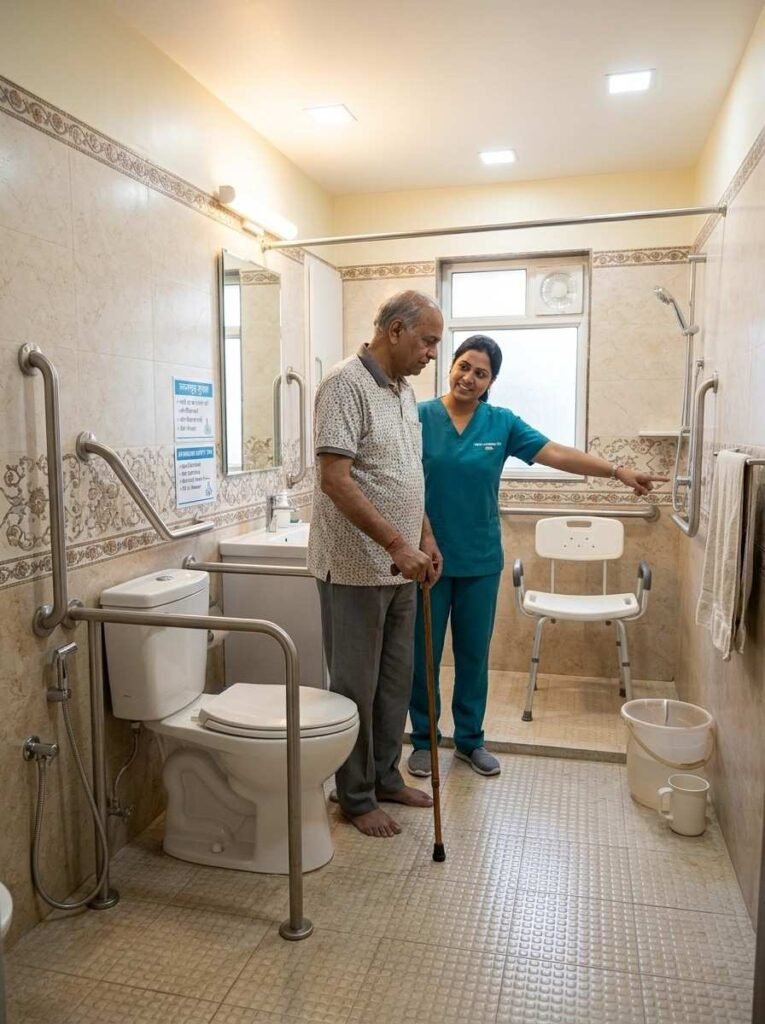
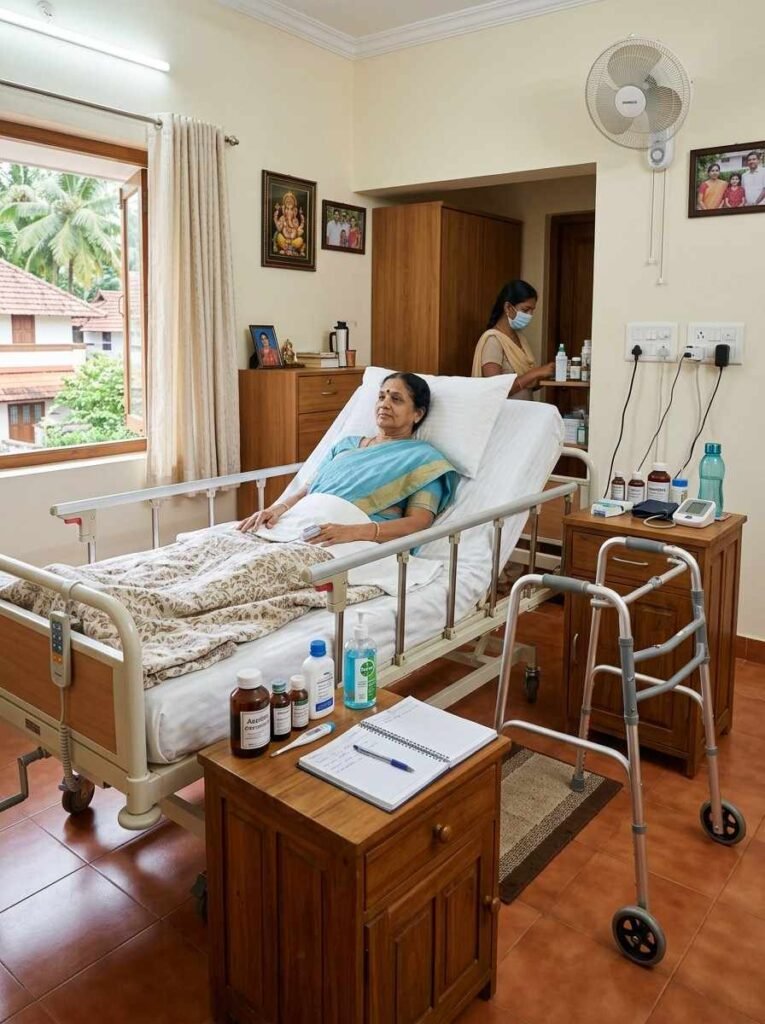
The bed is very important. It should be easy to get to from both sides. It should be at a good height so the patient can get in and out safely. If we can we should get a bed that can be adjusted like the ones they use in hospitals because this is very helpful for patients who are very weak.
We also need to make the bathroom safe. We should put grab bars near the toilet and in the shower because this helps prevent falls. The floor can be very slippery so we should use -slip mats and make sure the bathroom is well lit. A special chair for the shower can also be very helpful.
We need to make sure the patient can walk around the house without tripping. So we should remove any rugs or low furniture that could be in the way. If the patient is just learning to walk with a walker or cane we need to make sure the path is clear and wide.
If the patient has trouble walking it is better if their bedroom is on the ground floor. If this is not possible we might need to set up a bedroom on the ground floor for a while.
We also need to make sure the patient can call for help if they need it. So we should make sure they have a mobile phone close by or a bell or some other way to call the nurse or a family member if they are, in another part of the house.
How Long Does Stroke Recovery Take?
There is no answer. And families should be careful of anyone who gives one easily.
Recovery happens fast in the three to six months after a stroke. This is when the brain changes a lot and when regular rehabilitation works best. However recovery keeps going after this time. For years. Especially with regular physiotherapy and a supportive home.
Some patients get most of their function back. Others get stuck at a level of disability. Most are somewhere in between.
What research always shows is that how intense and good early rehabilitation is. Including what happens at home between therapy sessions. Is one of the signs of long-term recovery.
This is not a reason to feel pressured or guilty. It is simply the case, for taking home nursing and rehabilitation. It means you should take it seriously and do your best.
What to Expect in the First Week at Home
The first week is usually the most disorienting — for the patient and the family. The patient may feel nervous at home after being in a hospital for long. Being in surroundings can be comforting but it can also be sad. The patient sees what they could do before and what they cannot do now. It is normal for the patient to have emotional reactions during this week.
For the nurse who comes to the home the first week is mainly about figuring things out and setting up a routine.
This includes:
- Understanding the patient’s current functional level
- Making a schedule for taking medicine
- Finding out what might be the dangerous things like having trouble swallowing or falling
- Creating a routine that the patient can follow and depend on
- Talking to the doctor who’s in charge of the patients care
By the end of the first week at home the patient and the family should have a better idea of what daily life is like and what the patients recovery will be, like.
Working With the Rest of the Care Team
A home nurse for a stroke patient does not work alone. To help the stroke patient get better at home we need a team that works together.
This team includes a Neurologist or physician. The Neurologist or physician makes the overall medical plan for the stroke patient changes medications and checks how well the stroke patient is getting better when they visit.
The team also has a Physiotherapist. The Physiotherapist creates a rehabilitation programme for the stroke patient. The Physiotherapist often visits the stroke patients home times a week.
We also have a Speech-language pathologist on the team. The Speech-language pathologist helps stroke patients who have trouble speaking or swallowing. The Speech-language pathologist may visit the stroke patient at home. Tell them what exercises to do every day.
Then there is the Occupational therapist. The Occupational therapist helps the stroke patient learn to do things again like getting dressed, cooking and writing. The Occupational therapist teaches the stroke patient how to do these things in a way that works for them.
The home nurse is very important. The home nurse makes sure everything runs smoothly every day. The home nurse follows the care plan, watches for problems talks to the rest of the team and makes sure the stroke patients daily routine helps them get better.
In cities like Chennai, Bengaluru, Kochi and Hyderabad families can usually find all these professionals.. In smaller towns some things might have to be done over the phone or internet or, at the hospital. This is when the home nurses job becomes really important because they help fill the gaps.
South India-Specific Considerations for Stroke Care at Home
Language and Communication
For stroke patients with aphasia using a language is very important. A patient who has spoken Tamil or Malayalam all their life will likely respond better. Communicate more successfully in their mother tongue even if they were good at English before.
When arranging a home nurse for a stroke patient in Tamil Nadu, Kerala, Karnataka, Andhra Pradesh or Telangana matching the language is not optional. It is a must for care.
Diet and Nutrition
South food like rice, sambar, rasam and curries needs to be adjusted for stroke patients, especially those with swallowing problems or diabetes. A home nurse who knows food can help the family change meals to the right consistency and nutrition. This way the patient eats food instead of something new they do not like.
Family Involvement
In Indian families members are often very involved. Everyone, including children, siblings and in-laws usually has an opinion about the patients care. A home nurse in this situation must talk clearly with the family member while respecting the familys opinions.
The familys help can be very good for the patient. Patients with families tend to feel better emotionally during recovery.
Climate and Skin Care
South Indias hot and humid weather causes problems for stroke patients who’re bed-bound. Sweat and moisture can cause skin problems, like pressure sores and fungal infections. A home nurse here must focus on keeping the patients skin dry moving them regularly and checking their skin often.
Questions Families Should Ask the Home Nurse Before Care Begins
Before the time the home nurse comes to visit families should know some things for sure. They should ask the home nurse these things:
- What kind of experience do you have with patients who had a stroke?
- Have you taken care of people who have trouble swallowing or have feeding tubes?
- How will you tell us what is going on with our family member every day. Will you call us write it down or send us messages on WhatsApp?
- What will you do if our family members blood pressure gets too high or they seem like they might have another stroke?
- Are you okay with helping our family member do the exercises that the doctor and other helpers say they should do?
- What is the escalation process if something changes and the treating doctor needs to be informed?
These are not questions. The Home Nurse and the family just need to talk about these things so they can work together well from the start. Families should ask The Home Nurse these questions so they can feel good, about The Home Nurse taking care of their family member.
Conclusion
When you bring a stroke patient home the medical crisis is not over. This is actually the start of the important part of their recovery.
What happens at home is really important. The care they get the nursing they receive and the rehabilitation they do every day will affect how well they recover and how independent they become. This is not meant to scare you. It is just that this time is very important and the decisions you make now will have an impact on what happens in the next few months.
You do not have to know everything away.
Most families take things one day at a time. They figure out what their loved one needs change the care plan as they get better and get help from professionals when they need it. This is not a thing. This is how stroke recovery works.
A good nurse at home will do more than just take care of the things. They will be someone your family can count on during a tough time. They will notice things that need to be done. They will talk to you clearly. They will be there on the days and keep things going even when the patient does not feel like it.
So find a nurse and ask them lots of questions before they start. Stay involved, with your loved ones care not because you have to do everything. Because being there means a lot to them.
Stroke recovery does not always go as planned. There will be times when things get worse.. There will also be times when things get better and that is a great feeling.
Just give it time. Get the people to help your loved one.. Do not forget to take care of yourself too because taking care of someone else can be hard even if you are not doing it all the time.
You and your family do not have to go through this by yourself.