What Is Home Nursing Care? A Complete Guide for Families
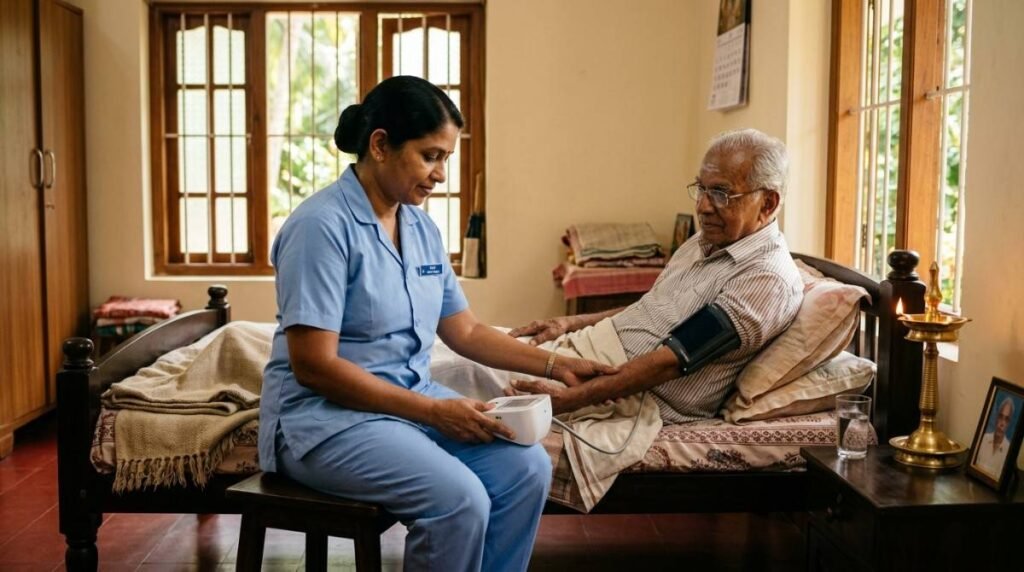
A few years ago, a family in Thrissur brought their seventy-eight-year-old father home after a minor stroke. The hospital had done what it was supposed to do. The acute phase was over, and the doctor said it was okay to take him home. When they got to their house, his daughter felt overwhelmed and unsure about what to do next.
Who is going to check his blood pressure. What if he falls down. Can we give him his medicines the way.
This is something that happens to a lot of families in Kerala, Tamil Nadu, Karnataka, Andhra Pradesh and Telangana every year. It is not just when someone has a stroke. Also when they have surgery or get diagnosed with cancer or have problems with diabetes or when parents just get older and older.
So, what is home nursing care, and how does it help families manage recovery and daily care at home?
What is home nursing care? It is a service designed to help families manage a patient’s recovery, treatment, and daily needs at home. It is for the time between when someone leaves the hospital and when they’re fully better. Home nursing care is for when a parent needs help with things every day and the family wants to help but they do not know how to do it by themselves because they do not have the right training. Home nursing care is what helps families, with this problem.
What Is Home Nursing Care?
Home nursing care is when a nurse comes to your home to take care of you. They help you with stuff and personal care. A nurse visits you at home checks how you are doing does what the doctor told them to do and keeps an eye on how you’re recovering.
This is not like hiring a helper or a caretaker. A home nurse is a trained healthcare person. They have a degree in nursing. B.Sc. Or GNM. They give you care in your own home.
Many families in Kerala, Tamil Nadu, Karnataka, Andhra Pradesh and Telangana like home nursing. They don’t choose to stay in the hospital for long. This is especially good for people, people who just had surgery and people, with long-term health problems. Home nursing care helps them. A home nurse takes care of them at home. They get the care they need.
Why Families Are Choosing Home Care Over Hospital Stays
Hospitals are necessary for emergencies and serious treatment.. After the really bad part is over staying in a hospital can actually make it harder to get better instead of helping. This is one reason many families start exploring what is home nursing care and how it supports recovery at home.
Think about an elderly parent who just had hip replacement surgery in a hospital in Kochi or Chennai. The care they get from doctors and nurses is very good.. The hospital is not a comfortable place to be it is hard to sleep and the family can only visit at certain times. The moment the doctor says they can go home the question is: what happens next?
This is where home care comes in.
Patients who get to recover at home usually feel more comfortable they eat food and they are more likely to take their medicine and follow the rules when their family is around. For patients being in a familiar place is really important, more important than we think. Home care is, about helping patients get better in their own homes with their families and that is why families are choosing home care over hospital stays.
What Does a Home Nurse Actually Do?
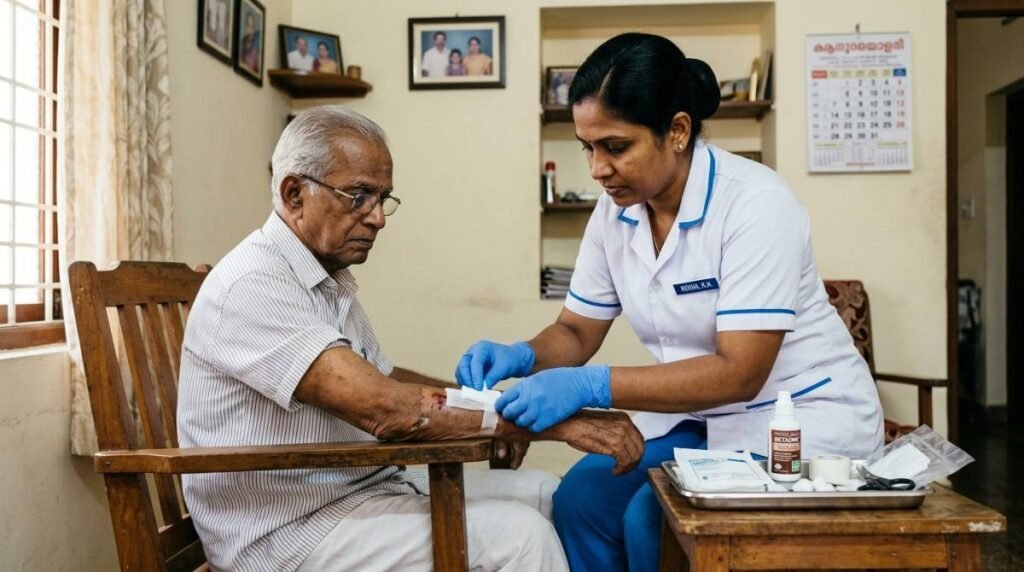
A home nurse does things depending on what the patient needs. This can be anything from helping with tasks to doing special medical procedures.
Medical and Clinical Tasks
- A home nurse gives patients their medicine, shots and special fluids as told by the doctor
- They take care of wounds and help patients after they have had an operation
- They check the patients signs like blood pressure, blood sugar, temperature and oxygen levels
- Catheter care and tube feeding management
- They assist patients with therapy and help them move around
- They give comfort care to patients who are very sick and near the end of their life
Personal and Daily Care
- A home nurse helps patients with bathing, getting dressed and keeping clean
- They help patients move around their home safely
- They make sure patients do not get bedsores by moving them regularly
- They keep an eye on what patients eat and drink
Support and Observation
- Tracking changes in the patient’s condition and reporting to the treating doctor
- They talk to the patients family about how the patient is doing
- They keep patients who live alone company and make sure they are okay
Who Needs Home Nursing Care?
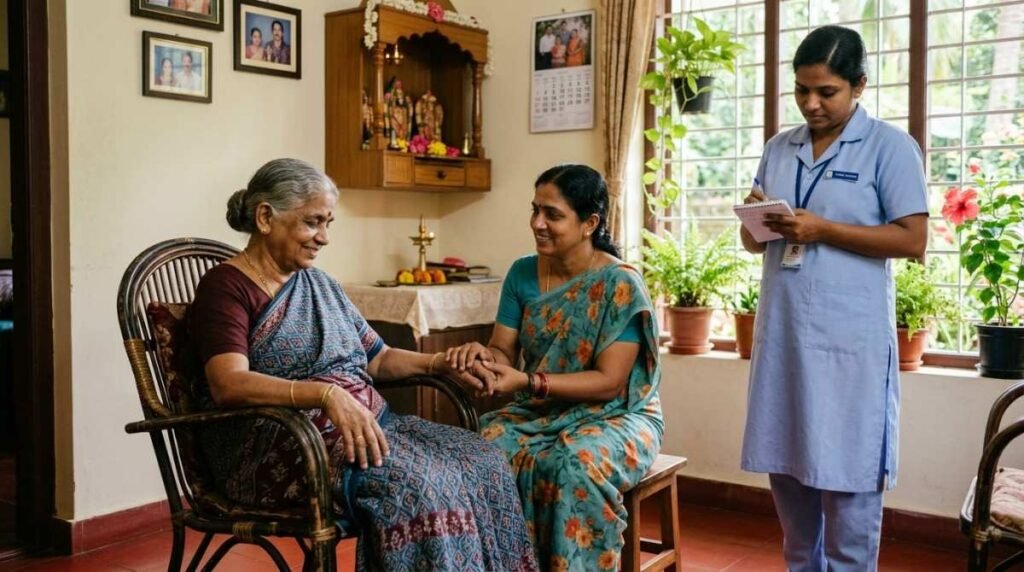
Home nursing is not just for people who’re really sick. It is helpful in different situations that families deal with at different times in their lives.
Elderly Parents Living at Home
As people get older they often have to deal with more than one health problem at a time. Many elderly parents in South India are managing blood pressure, diabetes and mobility issues all at the same time. And they are doing this while living alone or with their adult children who have jobs and other responsibilities.
A home nurse checks on them every day makes sure they take their medicine correctly watches for any signs of trouble and keeps their family informed. This is a practical way for families to support their ageing parents without having to put them in a care facility.
Wondering if your ageing parent needs professional support at home? Explore our detailed guide for practical advice, warning signs, and ways to ensure they receive the care they deserve.
Read next: Are Your Elderly Parents Getting the Care They Truly Deserve?
Post-Surgery Recovery
When people are discharged from the hospital after surgery it does not mean they are fully recovered. For weeks after surgery they need to take care of their wounds do physiotherapy avoid moving around too much and take their medicine as directed.
A home nurse makes sure this recovery period is safe. They change the dressings on the wounds check for signs of infection and help the patient move around without falling or having a setback.
Managing a Chronic Illness
Conditions like Type 2 diabetes, COPD, chronic kidney disease, and heart failure do not go away after a hospital visit. They need to be managed every day. And going to the hospital all the time for check-ups is not practical or necessary.
A home nurse takes care of the tasks manages the medicine and watches for any signs of trouble so the patients condition stays stable and they only need to go to the hospital when it is really necessary.
Learn how professional home nursing can help diabetic patients stay healthy and avoid complications.
Read next: Home Nursing Care for Diabetic Patients: Managing Diabetes Safely at Home
Stroke or Paralysis Recovery
Recovering from a stroke is an difficult process. Patients often go home with some paralysis, speech problems, swallowing issues. They need both medical care and physical rehabilitation.
A trained home nurse, one with experience in neuro or rehabilitation care can really improve the recovery outcomes. They work with physiotherapists prevent complications like bedsores and infections and provide the care that stroke recovery needs.
Recovering from a stroke often requires long-term support, rehabilitation, and careful monitoring at home.
Read next: Home Nursing Care for Stroke Patients: What Every Family Needs to Know After Discharge
Cancer and Palliative Care at Home
For patients who are getting chemotherapy or are living with an illness being able to stay at home with their family is very important. Palliative home nursing focuses on managing pain providing comfort, dignity and emotional support.
This is not about giving up on treatment. It is about making sure that the patients remaining time. Whether it is weeks or months. Is spent with quality, comfort and the people they love.
New Mothers and Newborn Care
Taking care of a mother after delivery is not just about letting her rest. New mothers who have had a section or a complicated birth need to have their wounds checked manage their medicine and get guidance on breastfeeding and nutrition.
A post-natal home nurse supports both the mother and the newborn in those early weeks. Watching for signs of complications and giving new parents the reassurance that someone, with clinical training is there to help.
Types of Home Nursing Care Explained
Skilled Nursing Care
This is clinical care delivered by a qualified nurse. They do things like wound dressing give injections monitor signs manage catheters and give IV medicine. To do this job you need to be a General Nurse or have a B.Sc. In Nursing. Usually a doctor prescribes this care.
Companion and Basic Caregiver Support
This care is about helping with tasks. It includes hygiene helping with mobility supporting meal times and providing company. A trained caregiver, not a nurse usually gives this care. It is suitable when a patient does not need medical procedures.
Specialised Clinical Nursing
For patients with complex or high-dependency need care. They might need nurses trained in ICU, oncology or neuro rehabilitation. This type of care gives a level of clinical skill at home.
Palliative and End-of-Life Care
This care is, for patients who’re very ill and have chosen to stay at home instead of going to the hospital. The main goal is to make sure they are comfortable manage their pain and support them and their family emotionally.
Post-Natal Nursing Support
New mothers and babies get care in the weeks after birth. This care includes checking on the mothers and babys health and giving advice on caring for the baby and recovering from childbirth.
How Home Nursing Care Works in India
If you are wondering what home nursing care is and how it works in India, the process is usually straightforward and can be arranged quickly. Lots of families think that arranging home nursing care is a hassle…
It usually starts when a doctor says that the patient needs some care after being in the hospital or needs help at home. This is common after surgery, during stroke recovery, while managing a chronic illness, or when caring for an elderly family member.
Next the family has to find a home nurse. They can do this by going through a home healthcare agency asking their hospital for a recommendation or using a nurse that someone they trust suggests. Once a nurse is found, they usually conduct an examination to find out what the patient’s condition is, what their daily routine is, how mobile they are, and what type of care they need.
After that they make a care plan. This plan says what kind of help the patient needs how often the nurse should visit, what medical things need to be done and how the family and doctor will be kept in the loop about the patients progress.
Once all of this is taken care of the home nursing care can start. The nurse comes to visit on the schedule they agreed on gives the patient the care they need keeps an eye on the patients condition and lets the family know if anything changes.
Nowadays, home care nursing in India is becoming increasingly popular, and many providers in Kerala, Tamil Nadu, Karnataka, Andhra Pradesh and Telangana offer flexible care options. Home nursing care can be a few hours a day or it can be full-time 24-hour care. This means families can pick the level of help that works best for them and their home nursing care needs. Understanding what is home nursing care is can help families choose the right level of support for their loved ones. Home nursing care is a practical option for families who need help taking care of their loved ones at home.
Is Home Nursing Care Safe?
This is a question that every family has.. It’s a fair question to ask.
When a qualified nurse takes care of a patient at home it is safe. The nurse must have the qualifications. Home nursing is good for conditions if the nurse is trained to provide the right care.
Here are some things to check when you arrange for a home nurse:
- Verify the nurses qualifications. Look for GNM, B.Sc Nursing or Post-Basic specialisation.
- Check if the nurse has experience with the patients condition.
- Make sure the doctor treating the patient agrees with the home care plan.
- Ensure the nurse, family and hospital communicate regularly.
If you have a patient with a complex medical history make sure a doctor is available for a phone consultation. This is, in case the nurse sees something that needs attention.
Home Nursing in South India — What Makes It Different Here
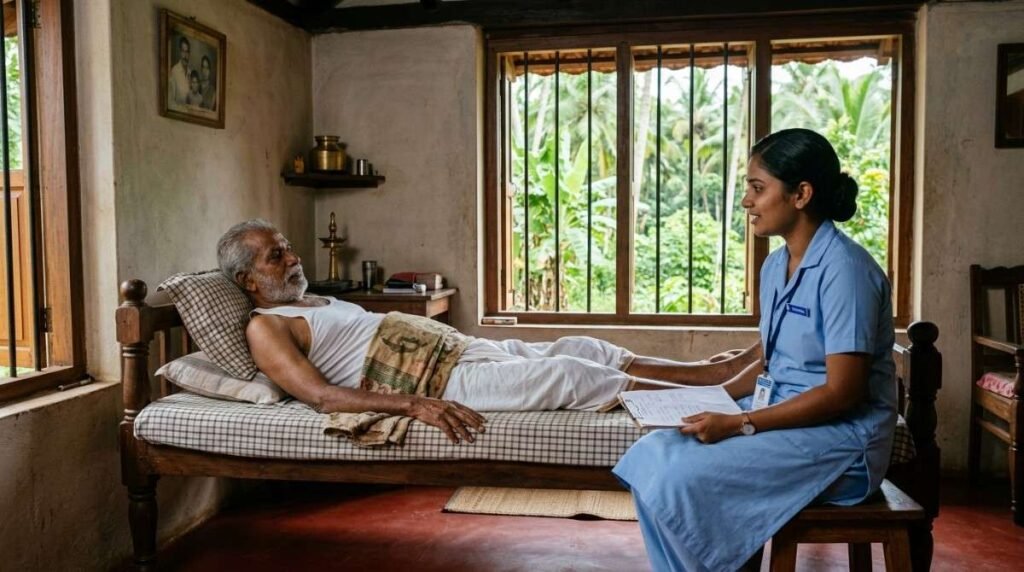
In South India families have some needs and situations that affect home nursing.
Joint family structures are still common in Kerala, Tamil Nadu, and Andhra Pradesh. But with more nuclear families, especially in urban areas, adult children managing ageing parents from a distance rely heavily on home nursing to fill the gap.
When it comes to home nursing language is very important. For example an elderly patient in Palakkad who only speaks Malayalam may have trouble with a nurse who only speaks Hindi or English. This can make it hard for the patient to describe their symptoms and for the nurse to understand them. So families in Kerala, Tamil Nadu, Karnataka, AP and Telangana should make sure to ask about language preference when hiring a home nurse. They should look for a nurse who speaks their language.
Also dietary and religious considerations are important in care at home. A nurse who knows about food practices can help patients follow their nutrition plans.
Families in South India also want to make sure they can trust their home nurse. Many families prefer to hire nurses who are recommended by hospitals or verified agencies than unknown sources. They want to feel confident that their nurse is reliable and trustworthy.
When Should You Consider Hiring a Home Nurse?
Many families wait too long to make this decision. They usually decide to hire a home nurse after something bad happens, such as a fall or a trip to the hospital.
There are some situations where it’s clear that you should hire a home nurse.
For example:
- A parent has just had surgery or a stroke. Needs someone to check on them every day
- An elderly family member is taking a lot of medicine. The family is not sure they are taking it correctly
- The person who usually takes care of the family member is very tired. Not doing a good job
- A patient keeps going to the hospital for the reason over and over which means they are not getting the help they need at home
- The doctor says the patient would be better off if someone was watching them at home every day
You should think about hiring a home nurse before things get too bad. Do not wait until it is too late.
Hiring a home nurse does not mean that the family has failed. It is a decision that can mean better care for the patient and less stress, for everyone. Hiring a home nurse is an idea because it means the patient will get the care they need and the family will have less to worry about.
How Much Does Home Nursing Cost in South India?
The cost is almost always one of the things that families want to know. And that is a fair question. Home nursing is something that you have to pay for over and over so it is good to know what you are getting for your money.
The cost of home nursing is different depending on some things: what kind of nurse you need how many hours you need them for, how sick the person is and if you are using a company to find the nurse or if you are finding one on your own.
In South India here is what you might expect to pay:
- Visit-based care, where a nurse comes to your home for one or two hours a day to check on you and give you medicine is usually cheaper and works well for people who’re not too sick.
- Shift-based care, where a nurse is with you for eight to twelve hours at a time costs more. Is better for people who need help all day or all night.
- Having a nurse with you all the time is the expensive option and is usually only needed for people who are very sick or who are dying.
The cost of home nursing also depends on where you live. For example home nursing costs more in cities like Kochi, Chennai and Bengaluru than it does in towns because it costs more to live in those cities and it can be harder to find nurses.
One thing that people often forget is that if you do not get home nursing care you might have to go back to the hospital a lot and that can cost even more than getting good home nursing care in the first place. Home nursing in South India is a decision and the cost of home nursing, in South India is an important thing to think about.
Choosing the Right Home Nursing Support
Not every home nursing agency is the same. In India, where the sector’s not very regulated it’s essential to do some research before choosing one. It’s good for the patients safety and your own peace of mind.
Things to look for:
- Nurse verification: A reliable agency will show you the nurses qualification certificate. Confirm their experience before the first visit. If they can’t that’s something to note.
- A proper care plan: The agency should make a care plan based on the doctors notes. Tailor it to your patient. Not use a generic plan for every case.
- Clear communication channels: Before care starts find out who to contact if something changes overnight if the nurse can’t come on a given day or if you have a concern about the care.
- Transparent pricing: Hidden costs — for equipment, transportation, or emergency visits — should be discussed upfront. A trustworthy agency will give you a written breakdown.
Agencies referred by hospitals or those with a presence in your city tend to be more accountable than arrangements from unverified sources. Look for agencies like these. Home nursing agencies, like these are more reliable.
Conclusion
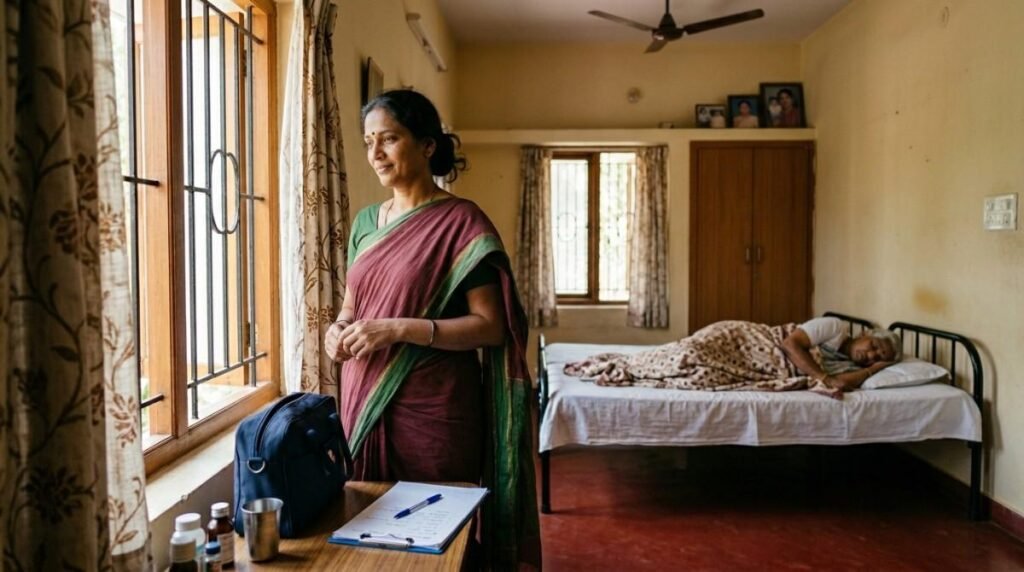
You never really plan for the moment you realise your family needs a home nurse.
It usually arrives without warning — a parent discharged from hospital sooner than expected, a post-surgery complication that needs daily monitoring, or simply the quiet realisation that managing an elderly family member’s care has become more than the household can handle alone.
Whatever brought you here you’re already doing great by researching and asking the questions. This puts your family in a position than most.
Home nursing care is not a last resort. It’s not a sign that something has gone wrong. For families in Kerala, Tamil Nadu, Karnataka, Andhra Pradesh and Telangana it’s just the best way to care for a loved one. In their own home, where they feel comfortable.
Don’t feel overwhelmed.
Start with what the doctor recommended. Understand what level of care your family member needs. Ask the questions before making any decisions.. Know that getting this right makes a big difference to how well and how quickly your loved one recovers.