
Questions to Ask Before Hiring a Home Nurse: A Practical Checklist for Indian Families

Most families do not think about needing a home nurse until it is really needed.
It happens all of a a parent gets to go home from the hospital sooner than expected a family member gets worse and needs more help or a doctor says they need a home nurse in the middle of a really busy week.
Then families have to find someone to take care of their one. They need to find a home nurse who’s good at their job and trustworthy because this person will be alone with someone they care about in their own home.
Most families do not know how to do this. They usually ask for recommendations from friends. They just pick someone who is available quickly. Sometimes this works out okay. Sometimes it does not. And when it does not work out the person who is sick can get worse like if their wound is not taken care of or if they miss a medication or if something bad happens that a trained home nurse should have seen coming.
Asking the questions before hiring a home nurse is a very good idea. It does not mean everything will be perfect. It helps a lot.
This is what families, in South India should think about before a home nurse starts taking care of someone.
Before You Ask Anyone Anything — Start Here
Before you talk to a nurse or an agency make sure you know what your family member really needs. This might seem obvious. People often skip this step.
Families sometimes hire a home nurse because they think it’s an idea but they don’t really know what the nurse should do. They don’t know how hours the nurse should work or what the doctor has suggested.
This can lead to two problems.. You pay more than you need to or the nurse doesn’t do what the patient really needs.
If the patient was in the hospital look at the discharge papers. Read what the doctor said. Write down the things that need to be done. Like dressing a wound giving insulin shots checking vital signs helping with physiotherapy or taking care of a catheter.
Take this list with you when you talk to a nurse or an agency. It helps you know what to ask. It makes the conversation more helpful. You don’t have to start from scratch each time. The list gives you a starting point. You can ask about each thing on the list. This way you can find the help, for your family member.
You will talk to nurses and agencies with confidence.
You will know what to expect from them.
Questions About Qualifications and Experience

What nursing qualification do you hold?
This is an important question. The answer really matters.
A good home nurse should have a GNM diploma or a B.Sc. In Nursing degree from a known institution. They must be registered with the Indian Nursing Council. These qualifications are not the same. They mean the nurse has had years of training in different hospital departments.
If someone says they are a nurse but can’t tell you their qualification or show you a certificate that’s a worry. In India people often call themselves nurses without training.
Can I see your nursing certificate?
It’s okay to ask to see their papers. A qualified nurse will not mind. If they hesitate or avoid showing you that’s important to know.
This is true whether you’re dealing with a nurse directly or through an agency. If an agency is placing a nurse in your home, ask whether you can see the nurse’s individual credentials — not just the agency’s registration.
How years of experience do you have as a home nurse?
Working in a hospital and working at home are not the same. A nurse whos only worked in a hospital might be skilled. Home nursing is different. They work alone. Have to make decisions on their own.
It’s worth asking about their experience as a home nurse not how many years they’ve been a nurse.
Have you looked after patients with this condition?
A nurse whos taken care of patients at home for years knows more about it than one who hasn’t. The same is true for stroke recovery, post-surgical care or palliative nursing.
This isn’t about rejecting nurses who don’t have experience with a condition. It’s, about understanding what you’re getting and what help the nurse might need to care for your patient.
Questions About the Care Plan

Have you read the patients discharge summary or the doctors instructions?
This is very important because a nurse who goes to a patients home without knowing the patients history is at a disadvantage. The nurse should read the doctors notes. Understand them before they start taking care of the patient.
If you are getting care from an agency you should ask them how they give the nurse the patients information. Is there a way they hand over the information? Does the nurse get the discharge summary before they go to the patients home for the time or do they just figure it out when they get there?
What does your care plan for this patient look like?
A good home nurse should be able to tell you what the care plan is after they have read the patients information. They should not just give you an idea of what they do but a specific plan for this patient and their condition. If the nurse or agency cannot tell you the care plan that’s something to think about. It means the care might just be reacting to problems as they happen of trying to prevent them.
How will you communicate with the treating doctor?
This is a question that a lot of families forget to ask. It is very important.
A home nurse works with the patients doctor and other medical people. If the nurse sees something that’s not right like a wound that is infected or the patients vital signs are not good what do they do? Who do they call? How quickly do they call them? Do they call the doctor directly. Do they need to tell the family first? It is good to know how the nurse will communicate with the doctor before they start taking care of the patient.
What happens if the patients condition gets a lot worse between visits?
This is a question if the nurse is only coming to visit the patient for a few hours a day. If the patient gets worse at night and the nurse is only coming in the morning what should the family do? The family needs to know what to look for who to call and if the nurse can be reached outside of their visit hours for help. The family should know what to do in case of an emergency. The nurse should be able to tell the family what to do if the patients condition changes. The care plan for the patient should include what to do in case of an emergency.
Questions About Practical Arrangements
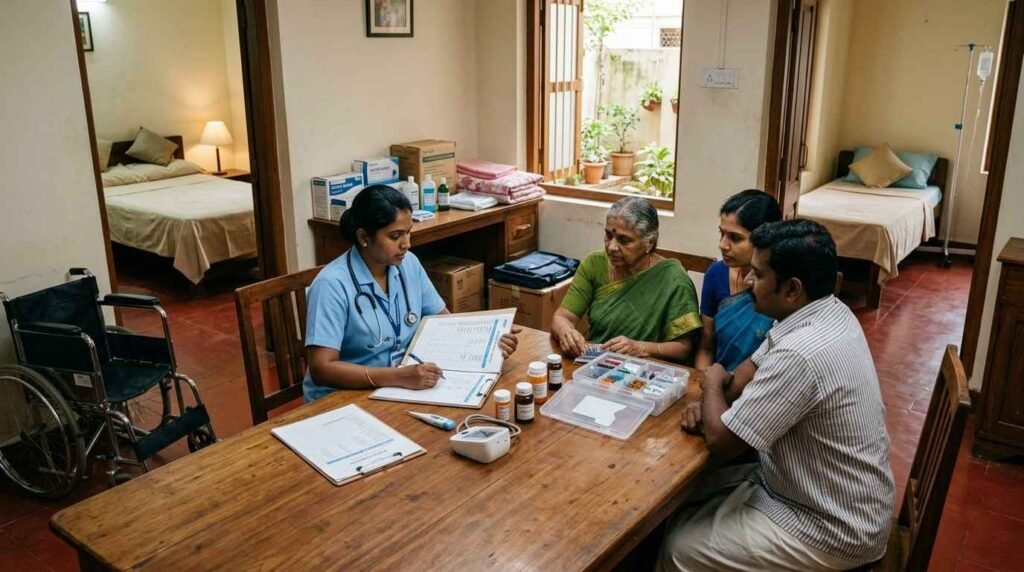
What are your working hours and visit schedule?
Clarity about timing matters from day one. What time does the nurse come to our home? How long does the nurse stay with us? How times does the nurse visit us in a day or in a week? Is the schedule fixed or can it be changed if we need to?
Families like mine have a lot of things to do like work and take care of children and the house. So we need to plan our day around the nurses visits. If the nurse comes at times every day it can be very disrupting. So it is really important to be clear about the schedule and to know if it can be changed if the patients needs change.
What happens if you are unwell or unable to come to our home?
A home nurse is a person and people can get sick or have emergencies. Sometimes the nurse may not be able to come to our home on a given day. This is a fact of life and it is not a criticism.
What is important is to know what happens when the nurse cannot come. Does the agency send another nurse to replace the one who’s sick? If so how quickly can we expect the new nurse to arrive?. How will the new nurse know what our patient needs? If we have arranged for the nurse to come to our home on our own, who will cover for the nurse if they cannot come?
This is an important question for patients who need nursing care every day like people who need their wounds dressed or who need help with a catheter or who need insulin. If the nurse does not come for a day it can have consequences for the patients health.
Are you comfortable with the tasks this patient requires?
We should make a list of all the tasks that our patient needs and ask the nurse directly if they are comfortable doing them. Not all nurses are comfortable with every procedure. For example a nurse may not have experience with a PEG tube or with managing pain for a patient who is dying. The nurse should tell us if they are not comfortable with any of the tasks so we can make arrangements.
This is not a test it is a practical conversation to make sure we make the right arrangements for our patient.
What equipment or supplies do you. What does the family need to provide?
The nurse may need to bring some equipment or supplies to our home like materials for dressing wounds or gloves or syringes or equipment for monitoring glucose levels. Some nurses bring their supplies while others expect the family to have them. Some agencies include the cost of equipment, in their fees while others charge extra for it.
We need to understand what the nurse will bring and what we need to provide so that we are prepared and the nurse has everything they need to take care of our patient.
Questions About Safety and Trust

Can you provide references from previous families you have worked with?
A nurse with experience in home care should be able to provide references from patients families or the agencies they have worked with. Talking to a previous families helps you understand how the nurse works at home.
Agencies that place nurses in homes should do reference and background checks before placing staff. Ask them to explain their process.
Has a background check been done?
This is a question to ask the agency.
The person you bring into your home will be alone with a family member who needs care. A background check. Which includes checking identity, previous work and any past problems. Is a step. Good agencies do this as a matter of course. Ask if it has been done and what it covered.
If you find a nurse through a referral think about whether you know enough about their background to feel safe. A recommendation from someone you trust like a hospital, doctor or friend is more helpful than an ad.
How do you handle situations with patients?
Patients in pain, confusion or frustration can be hard to care for.
An elderly patient who won’t take their medicine. A stroke patient who gets upset during therapy. A post-surgery patient who wants to move in ways that’re risky.
How the nurse handles these situations tells you a lot about their experience and personality. There is no one way. But a nurse, with experience will have a thoughtful approach that puts the patient first.
Questions About Language and Cultural Fit

Do you speak the patients preferred language?
This is very important in South India where older patients might feel more at ease talking in Malayalam, Tamil, Telugu or Kannada of English or Hindi.
If a patient cannot make themselves understood to their nurse they might not get the treatment. The nurse needs to know what the patient is going through like what kind of pain they have what symptoms they are experiencing or what they are worried about. If the nurse and patient do not speak the language the nurse does not have all the information they need.
For patients in Kerala, Tamil Nadu and Andhra Pradesh speaking the same language is not just a matter of preference it is a matter of getting the right medical care.
Are you familiar with our cultural practices?
In homes in South India this is really important. If a nurse is helping a patient with diabetes they need to know what the patient usually eats at home not just give them a diet plan that does not work for them. The nurse also needs to understand our customs like what we do every day how we like to be treated when we’re sick and how we like our families to visit us.
If a nurse knows about these things or is, at least willing to learn and respect them they can do a job and the patient will be more comfortable.
Questions About Cost and Agreements

What is the total cost of home nursing and what is included in this cost?
You need to ask for all the details, not the basic cost. Does the cost include things like consumables and equipment? What about travel costs? Do you have to pay extra if a visit takes longer than expected? What happens if you need to call someone out in an emergency?
Home nursing arrangements can have hidden costs. If you agree to a rate without knowing what is included you might get unexpected bills at a difficult time.
Is there a written contract for the home nursing arrangement?
When you hire a nurse, either through an agency, you should have everything in writing. The contract should say what care will be provided, when the nurse will visit how much it will cost, how notice you need to give if you want to end the arrangement and what happens if either you or the nurse wants to stop the arrangement.
Verbal contracts can be hard to remember. Even harder to refer to if something is not clear. A written contract helps protect both you and the nurse.
What happens if you need to end the home nursing arrangement?
Sometimes things change quickly. The patient might get better faster than you thought. Your situation might. You might need a different kind of care. You should find out how notice you need to give and if there are any extra costs if you need to end the arrangement early.
It is better to know these things from the start than finding out when you are stressed and need to make a quick decision, about the home nursing arrangement.
Conclusion
Hiring a home nurse is not a simple deal. It’s, about trusting someone to come into your home and take care of your family member. You want to be sure they have the skills and will do what they say they will do.
That trust is not built on instinct alone. It is built on asking the right questions, verifying the answers where verification is possible, and establishing clear expectations before care begins rather than trying to correct things after problems emerge.
Families who do well with home nursing usually prepare ahead of time. They know what their family member needs and what to ask when they make that call. They find out about the nurses qualifications. Check if they are real. They also figure out how they will communicate and what the costs are.
Don’t rush into anything even if it feels urgent. Take your time to get everything right. The way you set up the arrangement at the beginning will affect everything that comes after. It is crucial to get it the first time.
Hiring a home nurse requires patience and careful planning. You want to make sure your family member gets the care possible.