Home Nurse vs Caretaker: What Is the Difference and Which One Does Your Family Actually Need?
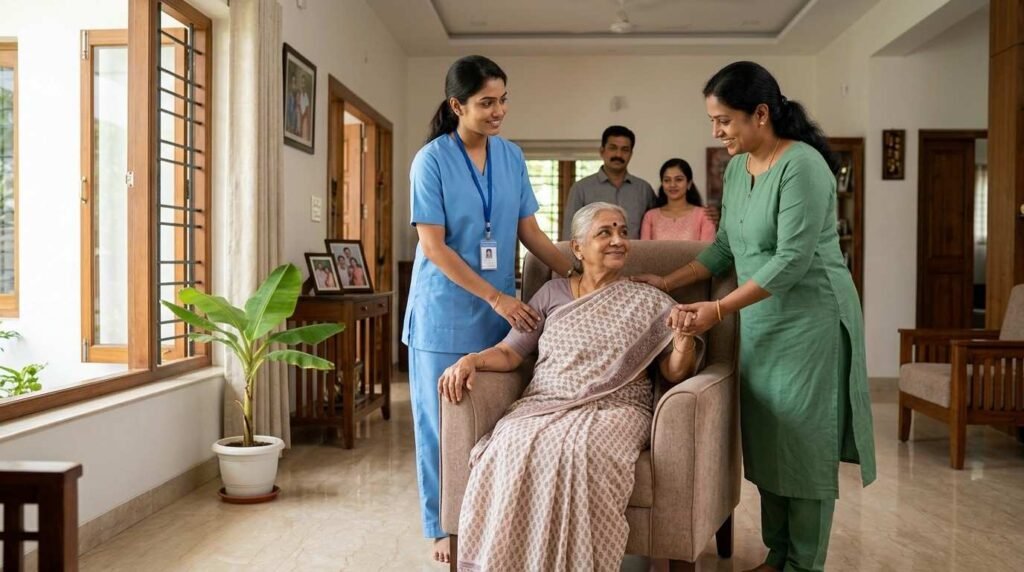
Most families searching for help at home are not thinking in clinical categories.
They think about their mother who has trouble walking up the stairs now. Their father who had an operation on his heart three weeks ago and still needs help taking care of his wound. Their grandmother who is still very smart but needs someone with her all day. The question these families are really asking is very simple: who do we need to help our family member and what will that person do for us.
People often use the terms home nurse and caretaker to mean the thing when they talk about it. Families use these terms hospital staff use them when someone is going home. Some agencies use them too.
Home nurse and caretaker are not the same thing.
The difference between a home nurse and a caretaker is important. It matters for reasons for practical reasons and, for money reasons.
If you get this wrong you might pay for help than you need or you might get less help than your family member really needs, which can be very bad.
Two Different Roles, Two Different Purposes
The way to understand the difference is this:
A home nurse is a person who has been trained to take care of medical things.
A caretaker is a person who has been trained to help with tasks.
Both home nurses and caretakers are very helpful.
Both home nurses and caretakers serve a purpose.
Home nurses and caretakers are meant for different situations.
One cannot do the job of the other when the patient needs something that is clearly the job of the home nurse or the caretaker.
What a Home Nurse Is and What They Do
A home nurse also known as a visiting nurse or private duty nurse has a real nursing degree. In India this usually means they have a GNM diploma or a B.Sc. In Nursing from a school. Some home nurses even have training in special areas like cancer care, critical care or helping people get better after an illness.
This degree is not for show. It means the home nurse has spent years learning how to take care of patients in hospitals. In rooms surgery rooms, intensive care units and maternity wards. Before they start taking care of patients in their own homes.
What a home nurse is trained and authorised to do:

Clinical procedures
Administering injections — subcutaneous, intramuscular, and intravenous. Wound assessment and dressing. Catheter insertion and care. Nasogastric tube management. IV fluid administration. Monitoring and managing drains and surgical sites.
Vital sign monitoring with clinical interpretation
A home nurse does not just record numbers. They understand what those numbers mean in the context of the patient’s condition. A blood pressure reading of 160/100 in a patient recovering from cardiac surgery means something different from the same reading in a healthy 45-year-old. A nurse knows this distinction and responds appropriately.
Medication management
Calculating and administering correct doses. Understanding drug interactions. Recognising side effects. Managing complex medication schedules for patients on multiple drugs simultaneously.
Clinical observation and escalation
Identifying early warning signs of complications — infection, deterioration, adverse drug reactions — and communicating these to the treating doctor before they become emergencies.
Condition-specific care Diabetic foot care
Post-surgical wound management. Stroke rehabilitation support. Palliative symptom management. Post-natal mother and newborn assessment. Each of these requires clinical training that goes beyond general caregiving.
What a Caretaker Is and What They Do
A caretaker, also known as a patient attendant, home aide or caregiving assistant helps people with daily living tasks. They are not nurses. Good caretakers go through training to learn how to take care of people at home.
What a caretaker usually does:
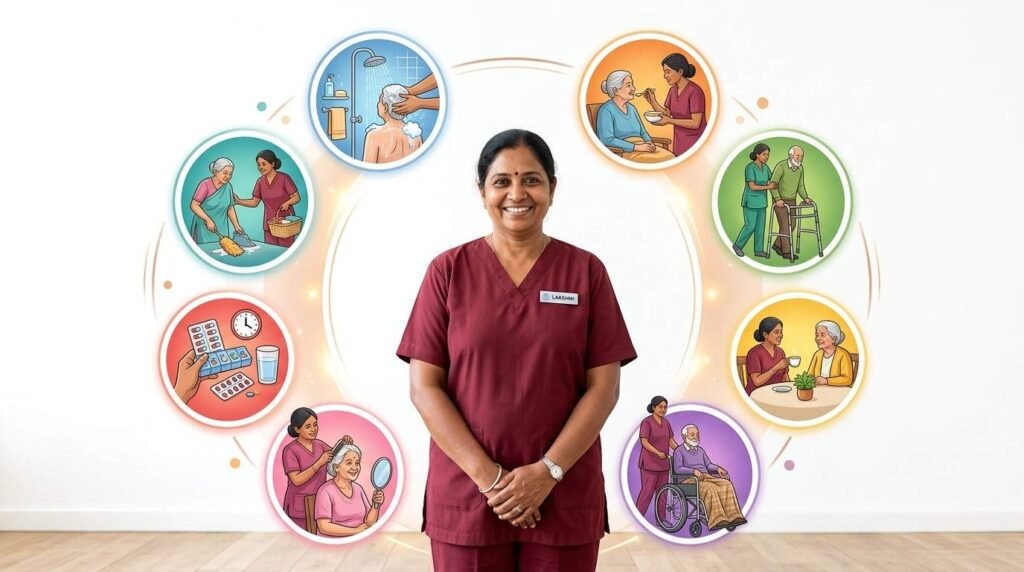
Personal hygiene and grooming
A caretaker helps with bathing, brushing teeth, washing hair, shaving, getting dressed and using the toilet. These tasks require patience. Being gentle with the person.
Mobility and positioning assistance
The caretaker helps the person move from their bed to a chair. They help them walk. The caretaker moves them in bed so they do not get spots. They also help people get in and, out of wheelchairs. The caretaker assists with mobility. They help with positioning.
Meal assistance
A caretaker makes meals or helps the person eat. They make sure the person drinks water during the day. If the person cannot eat by themselves a caretaker will feed them.
Companionship and emotional presence
A caretaker will sit with the person talk to them read to them and go for walks with them. This is important because many people, older people are alone, for a long time.
Basic household tasks related to patient care
A caretaker keeps the persons room does their laundry and makes sure everything is nice and tidy.
Medication reminders
A caretaker reminds the person to take their medicine at the time. However a caretaker cannot decide if the medicine is correct or if it is working well. A caretaker cannot say if the dose is right or wrong.
Where the Line Is Drawn
This is the important point. It is where families sometimes make mistakes that can be really risky.
A caregiver is not trained to do procedures. They should not put in catheters change dressings give shots or check if wounds are healing. This is not about being willing or trying hard. It is about having the training. Asking a caregiver to do tasks is like asking a good driver to fix the cars engine. They might want to. They just do not know how.
A home nurse is also not a housekeeper. Their job at a patients home is to provide care. It is not right to expect them to clean, cook or do household tasks in addition to their nursing duties. It takes away, from why they’re there.
Comparing the Two Side by Side
Qualifications
A home nurse has a GNM diploma or B.Sc. Nursing degree that is registered with the Indian Nursing Council. The home nurse has this degree. A caretaker usually goes through a training programme that lasts a few weeks to a few months and focuses on helping patients.
Clinical procedures
The home nurse can give injections. Do wound care and manage catheters and give IV and do clinical assessments. The caretaker cannot do any of these things. The home nurse is trained to do these procedures.
Medication management
The home nurse gives medications. Calculates the right dose and keeps an eye on the patient. The caretaker reminds the patient to take their medicines that are already organised.
Escalation
The home nurse looks at the patient. Understands what is going on and talks to the doctor. The caretaker sees if the patient is doing okay and tells the family. The home nurse is trained to observe the patient.
Personal care
Both the home nurse and the caretaker can help with bathing and grooming and moving around. The caretaker usually helps with personal care all the time.
Availability
Home nurses in India usually work in shifts. Come at certain times. The home nurse does not always stay with the patient. Caretakers are usually there all day. Live with the patient.
Cost
The home nurse costs money because they have special training and have to do a lot of things. The caretaker is usually cheaper, for help. The home nurse has a lot of responsibilities.
So Which One Does Your Family Actually Need?
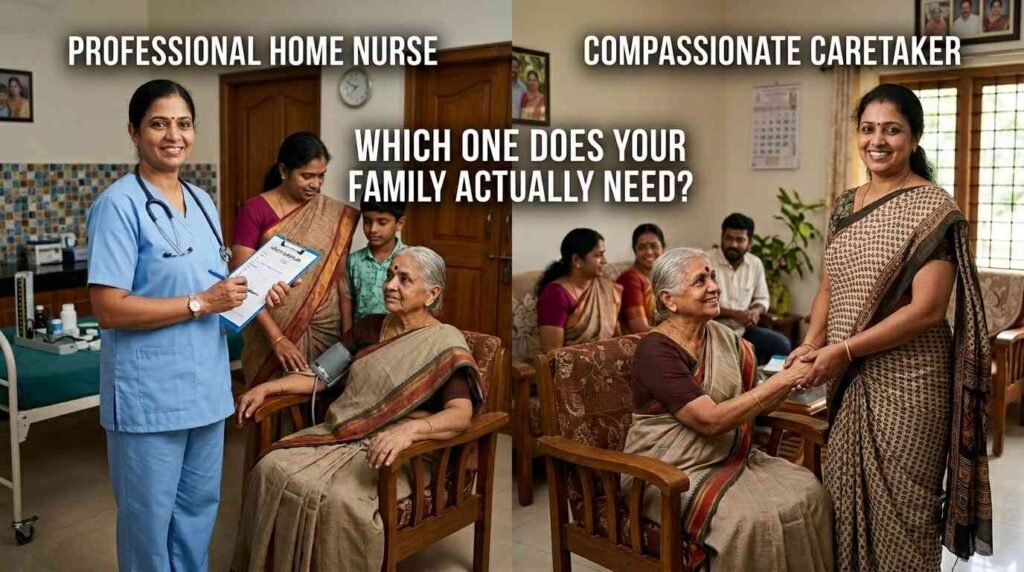
This is not an answer. It really depends on what the patient needs. And being completely honest about that is where you start.
Your family needs a home nurse if:
- The patient has a wound that needs to be dressed and checked regularly.
- They need to take insulin injections or other medications that have to be injected.
- They have come home from the hospital with a catheter, drain or feeding tube that needs to be taken care of.
- They are getting better from a stroke a heart procedure or a big surgery.
- They have a condition like diabetes with complications, COPD or advanced kidney disease that needs to be checked every day and needs action when things are not okay.
- A doctor has said that nursing care is necessary as part of the plan when they leave the hospital.
Your family needs a caretaker if:
- The patient is older and mostly healthy. Needs help with things like bathing, dressing and moving around safely.
- They live alone. Need someone to keep them company and help with basic things during the day.
- They are getting better from an illness and need help with everyday tasks rather than medical care.
- The family needs someone to help with taking care of the patient every day without the cost of full nursing care.
Your family may need both if:
- The patient needs medical help. Like daily wound care, managing insulin and checking vital signs. But also needs someone to take care of them all day.
- In this case the home nurse comes to visit for tasks and the caretaker takes care of the patients personal needs when the nurse is not there.
- This is an arrangement in many South Indian households where they are taking care of older patients, with complex conditions and it often works out to be the most practical and affordable solution when the patient needs a lot of care.
What Families in South India Often Get Wrong
There are two things that families in South India do that cause problems. These two things happen over and over again.
Arranging a caretaker when a nurse is needed
Families in South India do this because it is cheaper and easier to find a caretaker. A family in South India will arrange for a caretaker to be with a parent after the parent has had surgery because they want someone to be present with the parent.
The family in South India does not think about the fact that the parents wound needs to be taken care of by someone with medical training. The catheter also needs to be taken care of by someone with training. The parents medication schedule needs to be watched over by a nurse. The caretaker will try their best to take care of the parent. The caretaker is not a nurse and does not have the right training. Small medical problems do not get taken care of. Can become big problems that send the parent back to the hospital.
Arranging a nurse when a caretaker is sufficient
This is not as bad. It is a waste of money. If an elderly person is stable and just needs help with things like bathing and eating they do not need a nurse to be with them for six hours a day. The family in South India pays a lot of money for something they do not really need. The nurse may end up doing things that are not really nursing tasks. Which is not a good use of their skills and is not very satisfying for the nurse.
The right thing to do is to think about what the patient needs.
Families in South India should talk to the doctor to figure out if they need a nurse or a caretaker This way families, in South India can make the choice and get the right person to take care of their family member.
Questions to Ask Before Deciding on Care
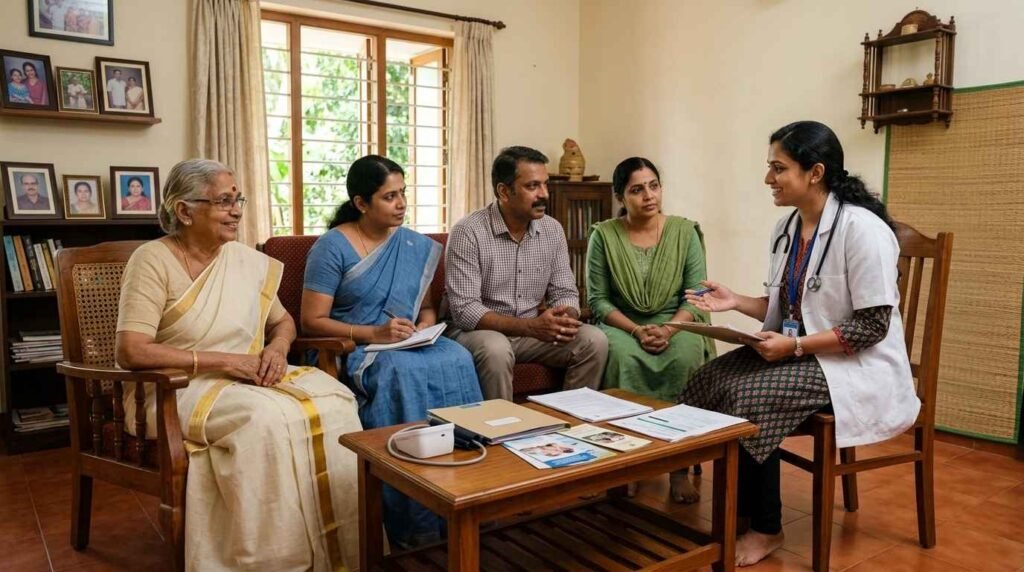
Before you arrange for a home nurse or caretaker here are some questions to help you decide:
- Has the doctor said what kind of care is needed at home? If there is a discharge summary or a doctor’s recommendation, that is the clearest guide.
- Does the patient need procedures like wound care, shots or help with a catheter every day? If so you need a nurse.
- Is the patients condition stable or might it change and need a doctors interpretation? If the patient is stable and needs care a caretaker might be okay.. If their condition is being actively managed they need a nurse.
- How hours a day does the patient need help? A nurse might visit for a couple of hours to handle needs. A caretaker might be needed for the rest of the day.
- How much can the family be there to help? If family members are, around most of the day they might not need much outside help as those who are away working.
A Note on Verification — for Both Roles
When you are looking for a home nurse or a caretaker verification is very important. This is South India, a place with real people. The person you are hiring will be alone with your family member for a time.
If you want to hire a home nurse you should ask to see their nursing registration certificate. A good nurse is registered with the Indian Nursing Council. You can check if they are real. Look at the certificate check the registration number. Ask about their experience, with the specific condition that your family member has.
For a caretaker you need to ask about the training they had check what other families they worked with before say about them and if you are using an agency ask what the agency does to check the background of their staff before they send them to work in homes.
It takes time to trust someone.. Doing these simple checks is a good way to start and it helps keep your family safe and the person you are hiring safe too.
Conclusion
When we think about a home nurse versus a caretaker we should not worry much about what we call them. What is really important is knowing what our family member really needs and being honest about it so we can make the choice.
A home nurse is someone who can give care in our home. A caretaker is someone who can give our family member the support they need every day. Both a home nurse and a caretaker are important. They can work together to help our family member feel safe and comfortable at home without having to go to the hospital all the time especially in many places in South India.
We need to think about what our family member needs. What does the doctor say they need to get ? What things need to be done every day to take care of them? Who is qualified to do these things for a home nurse and a caretaker?
If we can answer these questions it will be easy to decide whether we need a home nurse or a caretaker, for our family member.