Post-Natal Home Nursing Care: What New Mothers in South India Should Expect
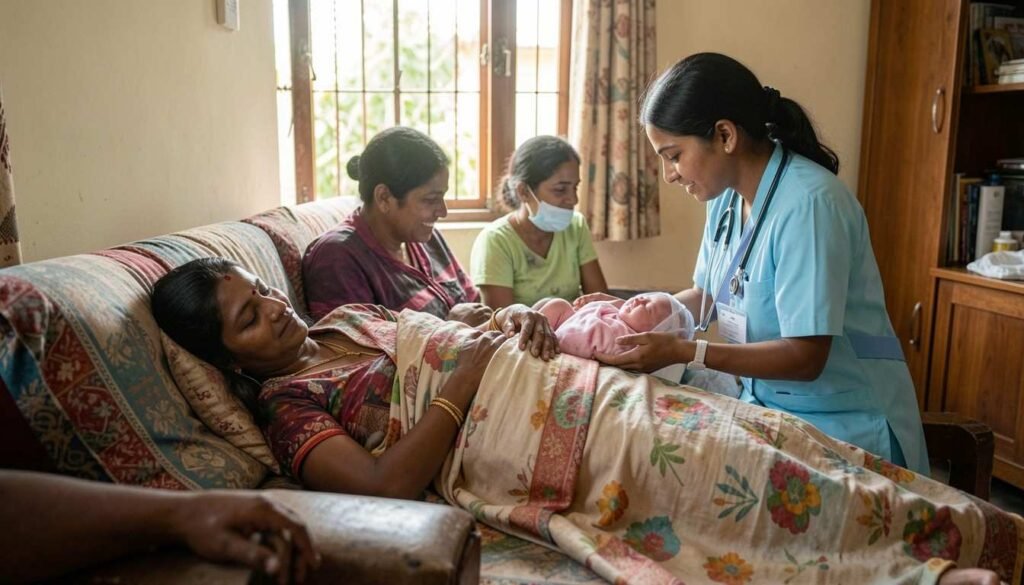
The first night home after delivery is nothing like anyone imagines it will be.
The baby is finally here. The hospital stay is over. Everyone around you is smiling and relieved. And somewhere underneath all of that — you are exhausted in a way you have never felt before, your body is recovering from something enormous, and a tiny person is entirely dependent on you for everything.
Nobody tells you that this part — the coming home part — is where most new mothers feel the most alone.
Post-natal home nursing care exists for exactly this period. Not to take over. Not to replace the family. But to make sure that both mother and baby are being looked after with clinical attention during the weeks when it matters most — and when the demands are highest.
What the Post-Natal Period Actually Looks Like
The six weeks after delivery are called the post-natal period. This is when a mothers body heals and gets better. Whether the baby was born vaginally or by section the mother needs time to recover. At the time she has to adjust to the babys needs and her new role.
This period is not about resting. It’s about getting better. For women it can be really tough. This is especially true for those who had a delivery new mothers who are doing everything for the first time or mothers who don’t have family to help.
In South India there is a tradition of taking care of new mothers. The mothers own mother often comes to stay with her. Special food is cooked to help the mother recover. Rest is important. Everyone in the household helps with the baby.
Now families are different. Many people live alone with their partner. Grandmothers and mothers-, in-law often live in cities. Both parents may work. So the support system that new mothers used to have is not always there.
A post-natal home nurse can fill this gap. They have training and experience. They are calm. Can help new mothers and babies.
What a Post-Natal Home Nurse Actually Does
The job of a -natal home nurse is to take care of two people: the mother and the newborn. A good post-natal home nurse pays attention to both of them equally.
Care for the Mother
Monitoring physical recovery
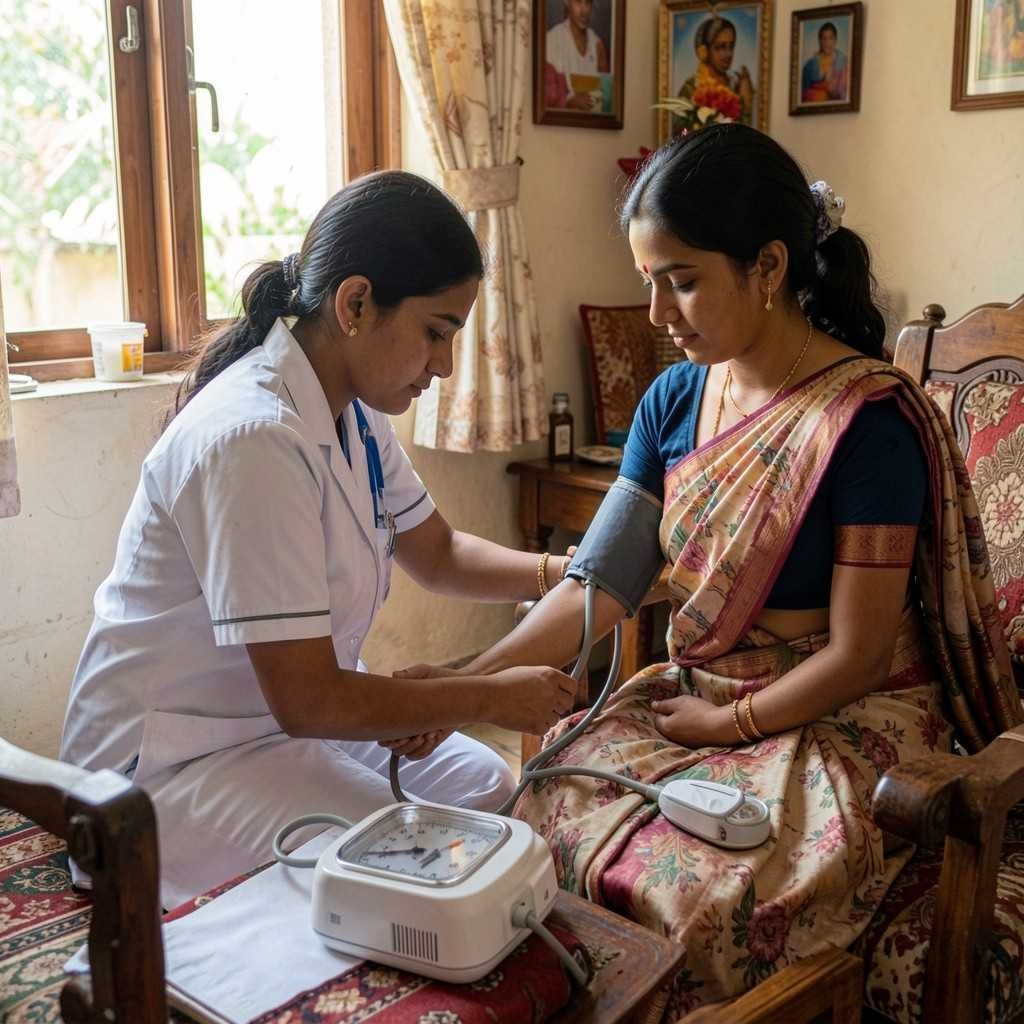
Monitoring recovery is a big part of the job. After a woman gives birth her body needs to be checked. A post-natal home nurse checks things like blood pressure, temperature and pulse. They also watch for signs of infection. Make sure the mother is not losing too much blood.
For women who had a C-section the post-natal home nurse takes care of the wound. They check the wound every day clean it and change the dressing. They want to make sure the wound is healing properly and not getting infected.
A post-natal home nurse is trained to do these things. It is not the same as a family member checking the wound. A post-natal home nurse knows what to look for.
Pain management
After a woman gives birth she can feel a lot of pain. A post-natal home nurse makes sure the mother is taking her pain medicine correctly. They also help her find ways to reduce the pain when she is doing things like feeding the baby or getting out of bed.
If the mothers pain is not managed she will not be able to sleep. She will also have a time taking care of the baby.. She might feel depressed.
Breast care and breastfeeding guidance
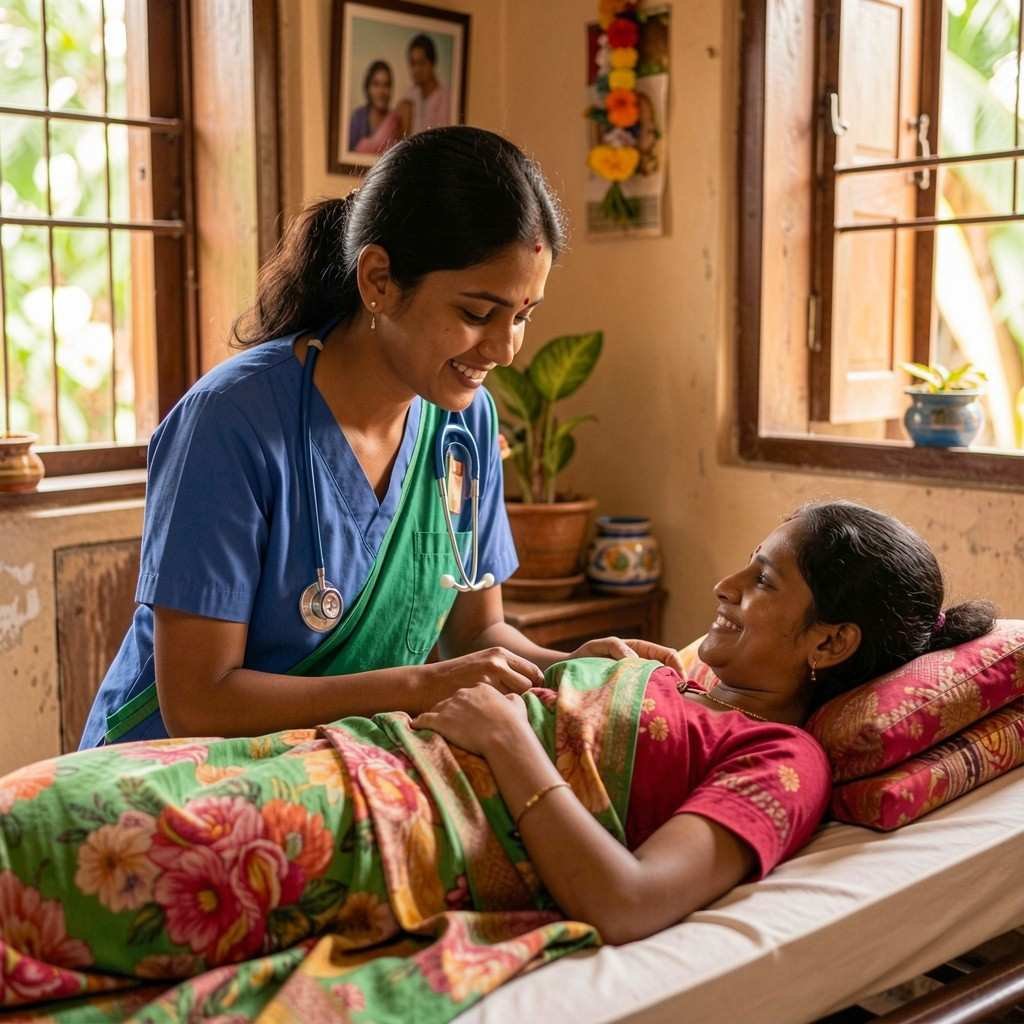
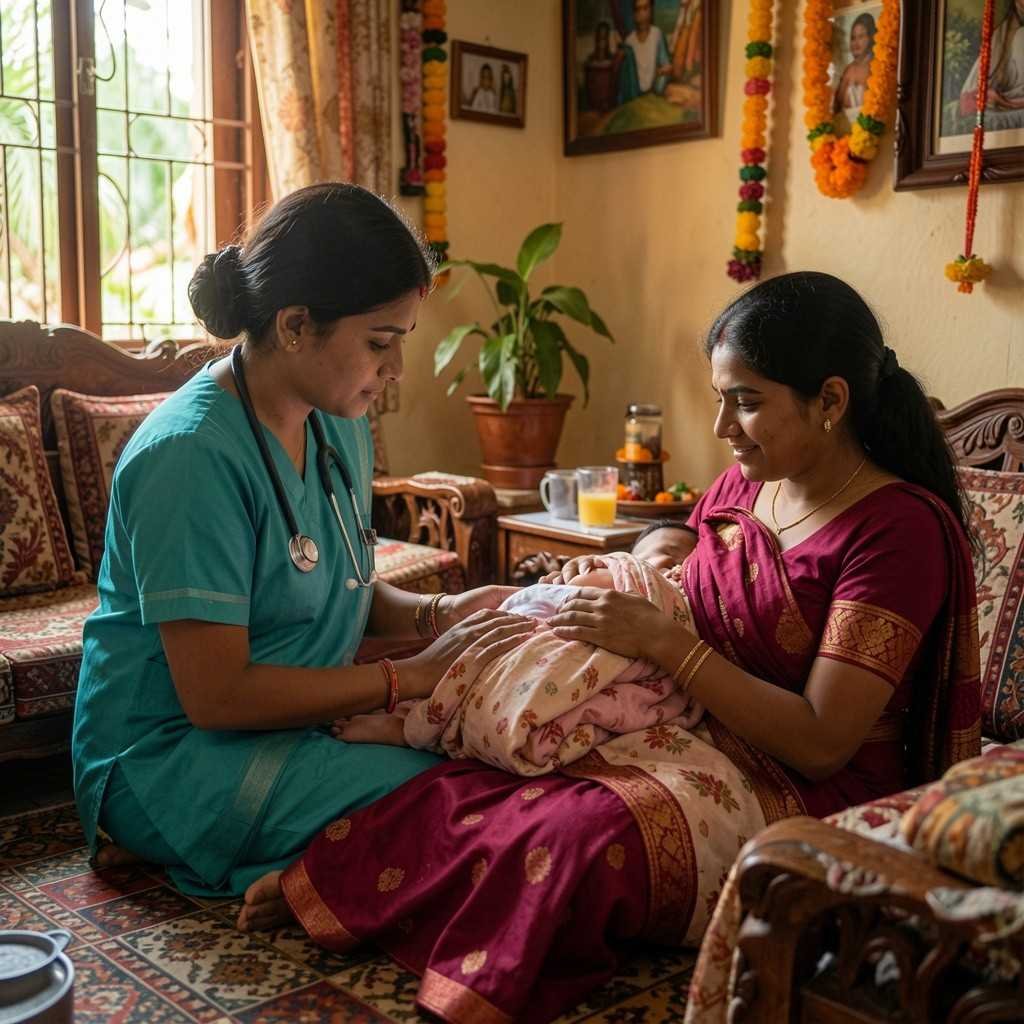
Breast care and breastfeeding guidance are also part of the job. Breastfeeding is natural. It can be hard for some mothers. A post-natal home nurse can help with things like latching and positioning. They can also give the mother advice on how to deal with nipples or engorgement.
For mothers who cannot breastfeed the post-natal home nurse can help with formula feeding. They can show them how to prepare the formula and how to feed the baby.
Watching for post-natal mental health concerns
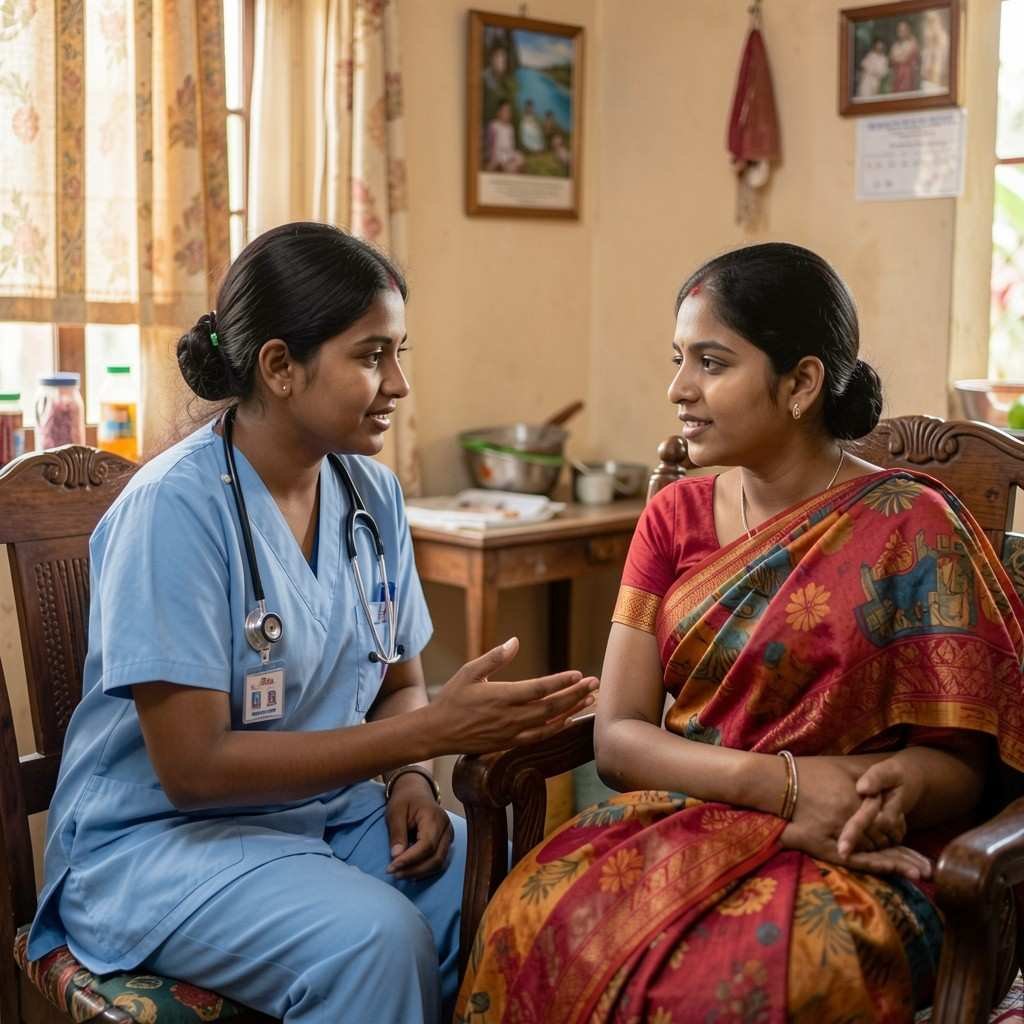
Watching for -natal mental health concerns is also important. Postnatal depression is a problem in South India. It is not just the “baby blues”. It is a condition that can affect the mothers ability to take care of herself and her baby.
A post-natal home nurse can notice the signs of depression. They can see if the mother is feeling hopeless or tearful all the time. They can also see if the mother is detached from her baby.
If the post-natal home nurse notices any of these signs they can tell the doctor. This can make a difference in the mothers recovery.
Supporting nutrition and recovery
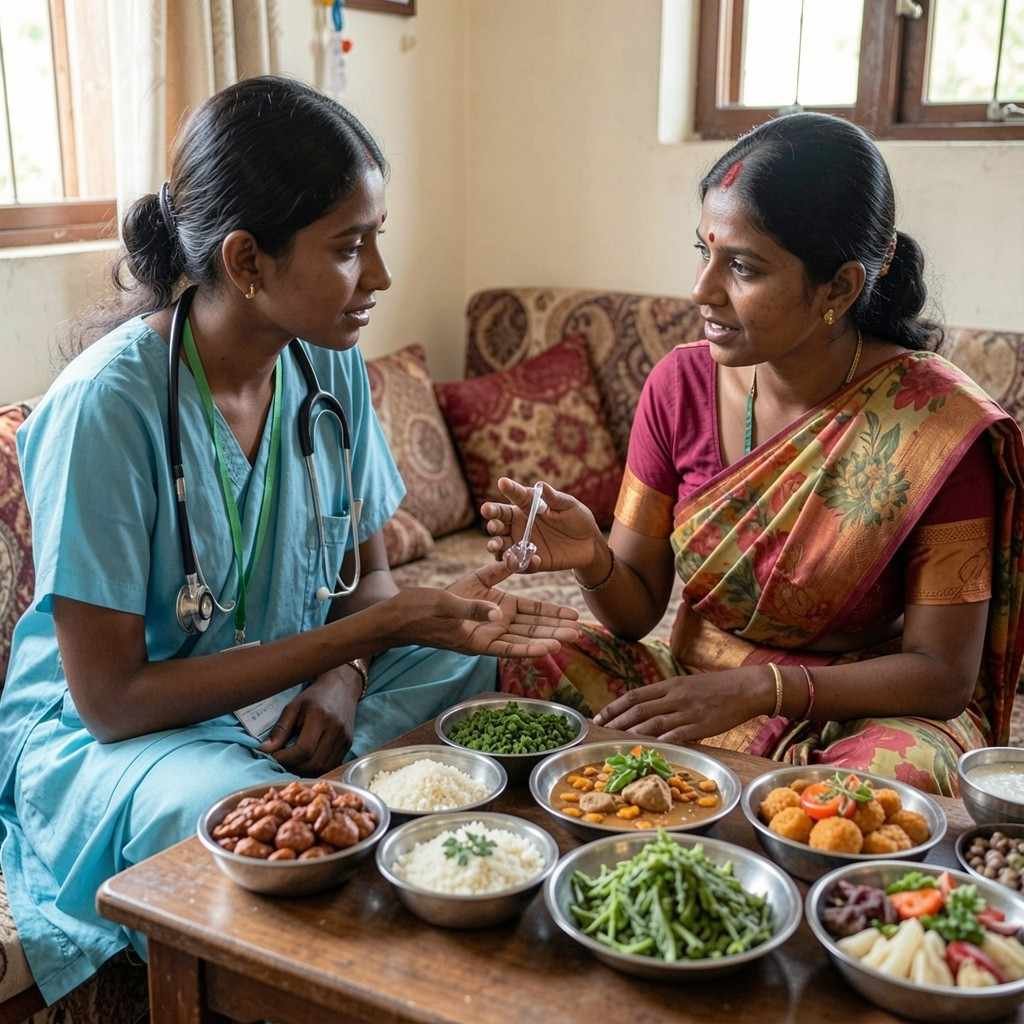
Supporting nutrition and recovery is also part of the job. A post-natal home nurse can help the mother eat well and rest. They can also give her advice, on how to deal with the demands of a newborn.
In Kerala and Tamil Nadu there are foods that can help the mother recover. A post-natal home nurse can work with the family to make sure the mother is eating these foods. They can also make sure the mother is drinking fluids and resting when she can.
Care for the Newborn
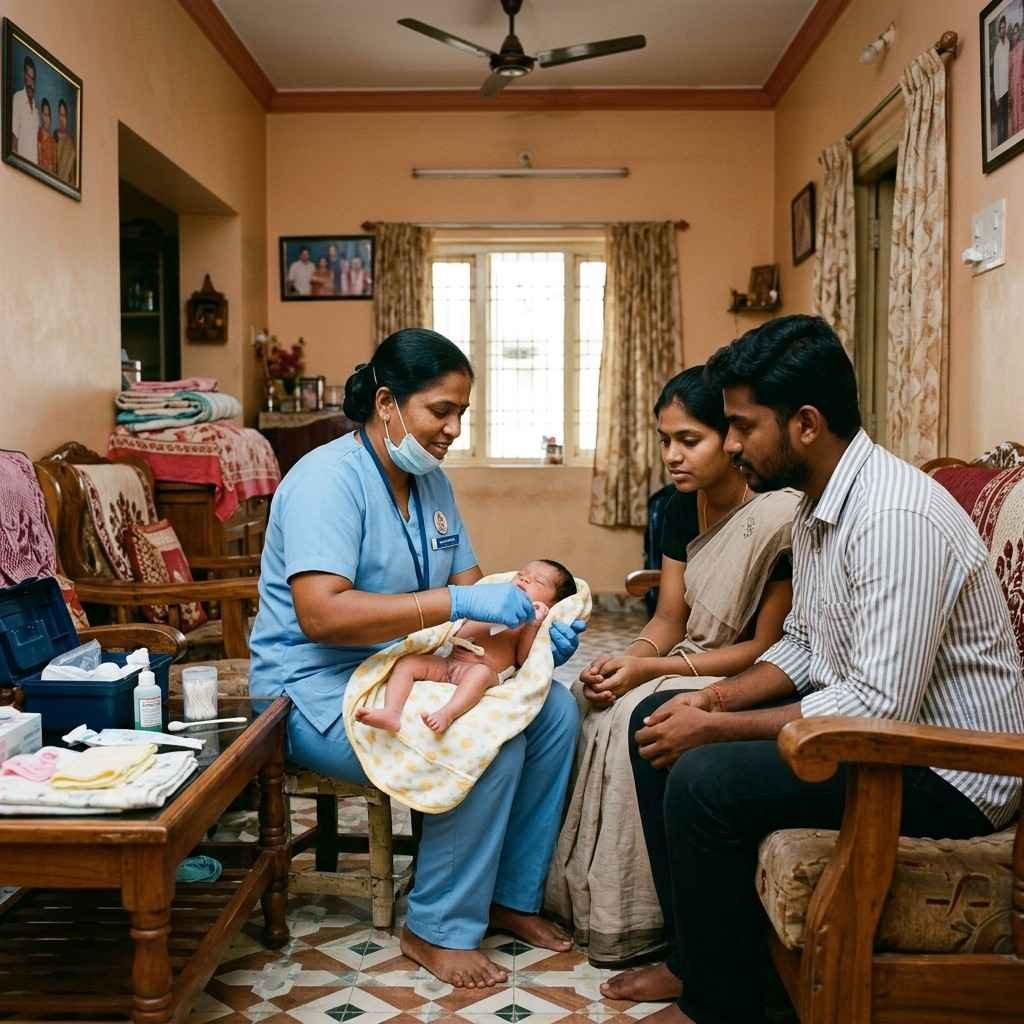
Daily newborn assessment
A post-natal home nurse checks on the baby every day. They look at the babys weight, skin colour, umbilical cord spot on the head feeding and toilet patterns and how alert and responsive the baby is.
Newborns can get worse quickly if something is wrong. A nurse who checks the baby every day knows what is normal for that baby.. Will see right away if something has changed.
Cord care
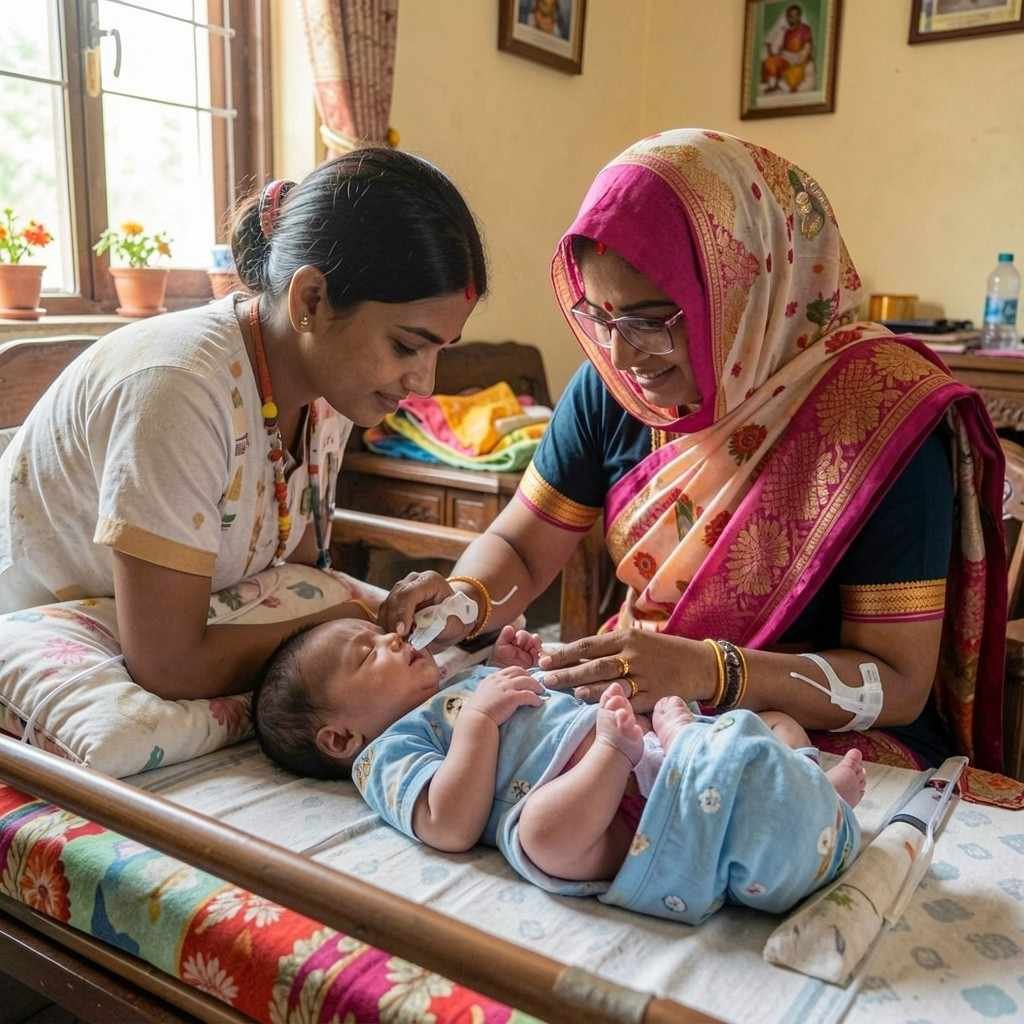
The umbilical cord stump needs to be kept clean and dry until it falls off. Within one to two weeks. A home nurse shows the family how to care for the cord looks for signs of infection. Advises the family on what to watch for.
In South Indian homes people still follow traditional cord care practices. A nurse who understands these practices can work with the family while keeping the baby safe.
Newborn bathing
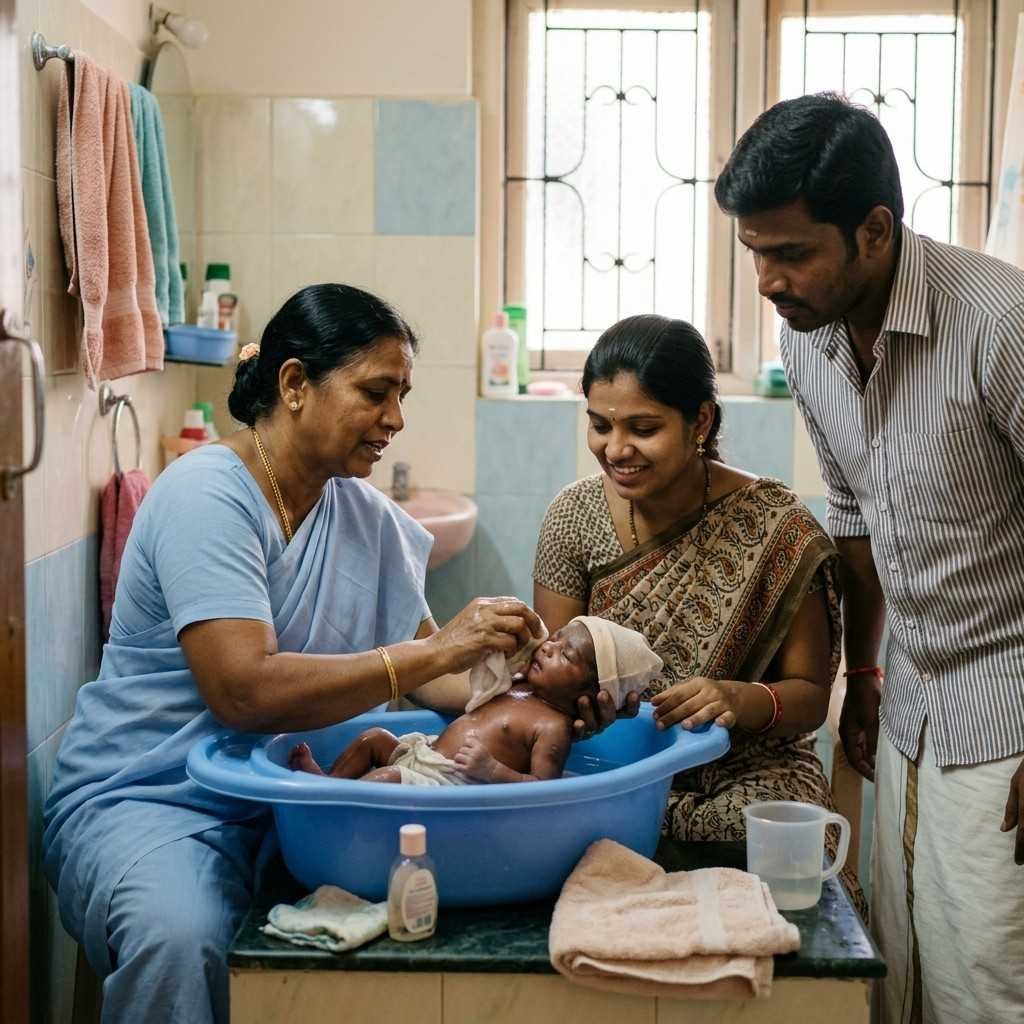
Bathing a newborn for the time makes many new parents anxious. A post-natal nurse shows bathing techniques. Water temperature, how to support the babys head how to clean the cord area and how to dry and dress the baby. And supervises until the family feels confident.
Monitoring feeding and weight
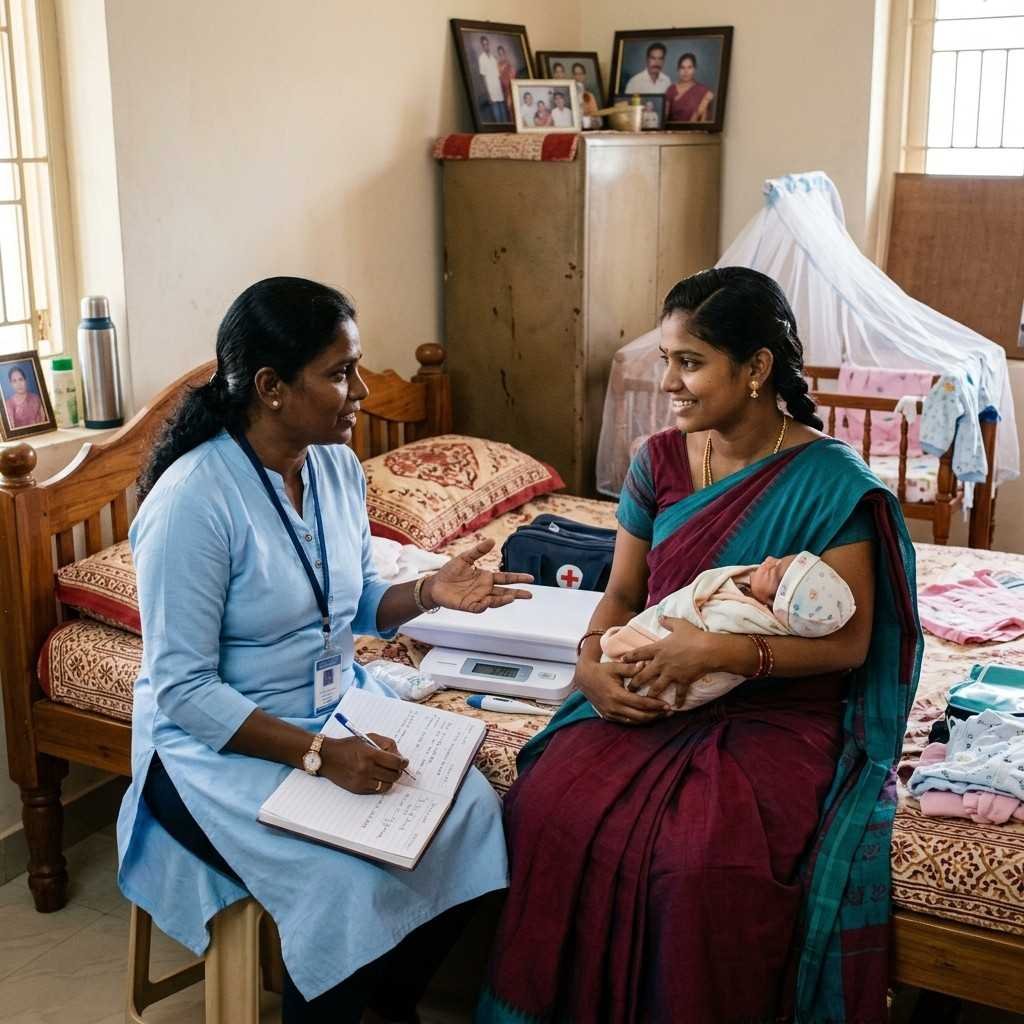
Whether the baby is breastfed or formula-fed regular weight checks are important. Newborns usually lose a weight then start gaining it back. A nurse tracks this. Flags concerns if the baby is not gaining enough weight.
They also monitor how often and how long the baby feeds and how many wet and dirty nappies there are. Which shows if the baby is feeding well. And the babys general happiness after feeds.
Recognising warning signs in the newborn
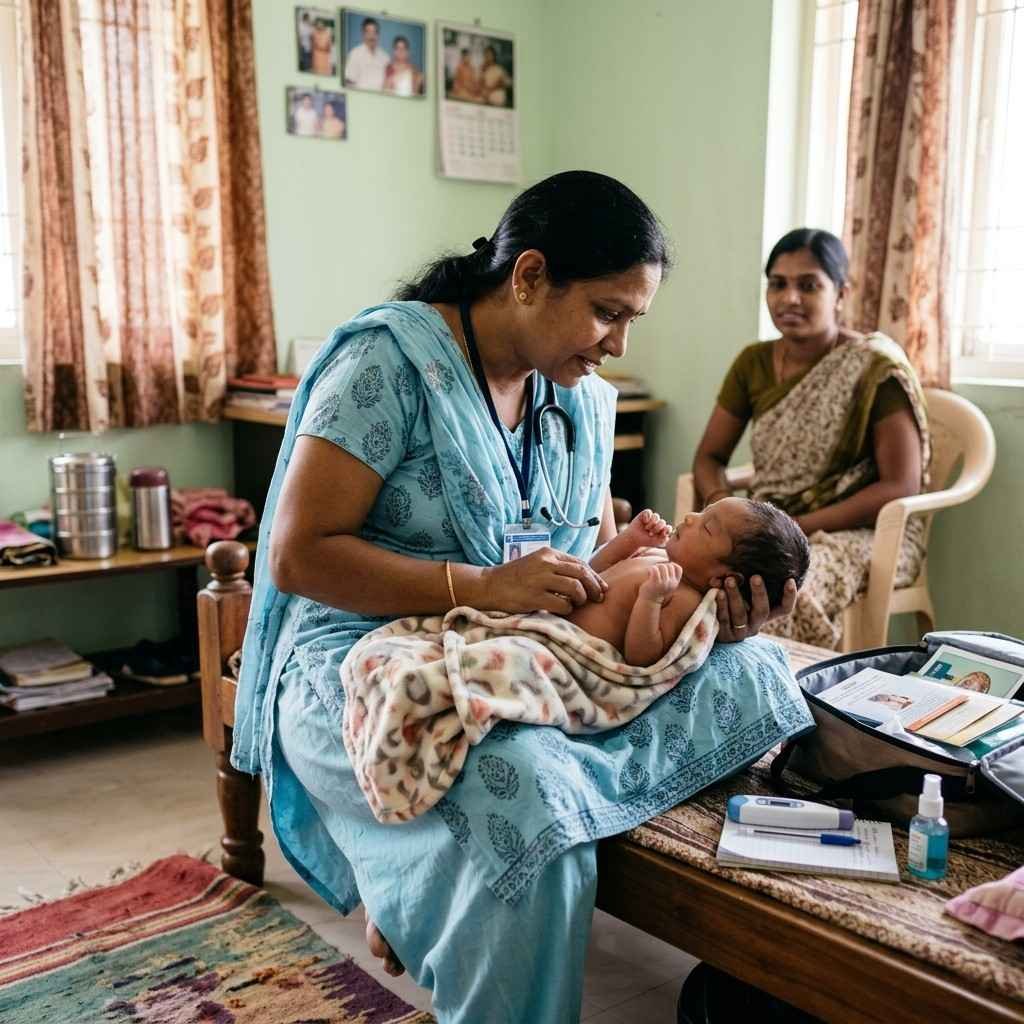
A home nurse knows the signs that a newborn needs immediate medical help. Jaundice that gets worse fever, breathing problems, poor feeding or unusual tiredness, skin colour changes or crying that is different, from normal newborn crying.
Parents often do not have the experience to tell if the babys behaviour is normal or needs attention. A nurse who checks in regularly and knows the baby provides a safety net during this period.
After a Caesarean Section — Why Home Nursing Matters More
A Caesarean Section is a surgery on your belly. Just because you have a baby at the end of it it does not change what your body has been through.
Getting better from a Caesarean Section while taking care of a baby is very hard. It is harder than people think, including the mothers and their families.
The cut, from the surgery makes it hard to move around. Getting out of bed picking up the baby and even coughing or laughing can hurt a lot in the few weeks. The mother needs to be careful and not lift anything or do anything that is too hard while her cut is healing.. She has to do all of this while taking care of a new baby who needs to be fed held and taken care of all the time.
A nurse who comes to your home after a Caesarean Section can help with taking care of the cut show the mother how to feed the baby help with taking care of the baby when the mother is too tired and check the cut to make sure it is healing properly.
For mothers who have a Caesarean Section and do not have a lot of help at home having a nurse come to their home is not something it is something they really need to get better.
The South Indian Context — What Makes Post-Natal Care Here Specific
In the South context post-natal care is very special. Across places like Kerala, Tamil Nadu, Karnataka, Andhra Pradesh and Telangana -natal care has a lot of cultural meaning. When a new mother has a baby she often goes back to her parents home for a weeks. This is called soothikaaval in Malayalam and vaazhapazham care in Tamil. Many families still do this. It is not as common in cities.
In some families they have a lot of support from their relatives. In these families a post-natal home nurse helps the family take care of the mother and the baby. The nurse checks the babys health. Makes sure the mother is doing well. The family also gives the mother traditional food and takes care of her.
In some families they do not have this support. For example young couples who live in apartments in Bengaluru or in cities like Chennai or Hyderabad away from their hometowns. In these cases a post-natal home nurse is very important. The nurse helps the mother with everything she needs.
Language is very important for mothers. When a new mother is tired and emotional she needs someone who understands her. If the nurse speaks the language as the mother, like Malayalam in Kochi or Tamil in Coimbatore or Telugu in Guntur it makes things easier. The nurse can understand what the mother is saying and help her.
It is also important for the nurse to understand the familys culture. For example some families give oil massages to their babies. Eat special food after having a baby. The nurse should know about these customs. If the nurse knows about these things the family trusts her more. She can help them better. Post-natal care in the South context is all about post-natal care and the nurse should be sensitive, to the familys needs and customs especially when it comes to post-natal care.
How Long Does Post-Natal Home Nursing Typically Continue?
It really depends on the type of delivery you had. It also depends on how your recovery’s going and who is supporting you at home.
- If you had a vaginal delivery and have family help at home you might need a post-natal nurse more in the first two weeks. Then you will need them less and less as you get more confident and feel better physically.
- If you had a C-section you usually need a nurse for least three to four weeks. This is to help with your wound and get you through the part of your recovery.
- If you had problems during delivery are feeling down after having your baby or don’t have family help at home you might need a nurse for the six weeks after your baby is born.
Your doctor, like your gynaecologist or obstetrician can give you advice on how long you will need a nurse. A good post-natal nurse will also be honest with you, about when you and your baby don’t need visits anymore. They will tell you when you are ready to manage on your own.
Conclusion
The weeks after delivery are not simply a waiting period before normal life resumes.
They are a distinct, demanding, and medically significant phase — for the mother’s body, for the newborn finding their footing in the world, and for a family that is reorganising itself around a new person.
For new mothers across South India, the availability of post-natal home nursing care means this period does not have to be navigated alone or on instinct. It means the wound is checked properly, the baby is assessed by someone who knows what to look for, breastfeeding struggles are addressed by someone with actual training, and the mother’s emotional state is observed by someone who understands that postnatal depression is real and worth catching early.
None of this replaces the warmth of a grandmother’s presence or the reassurance of family around the table. But it adds a clinical layer of safety and support that makes the difference between a post-natal period managed with confidence and one spent in quiet anxiety.
Every new mother deserves both.